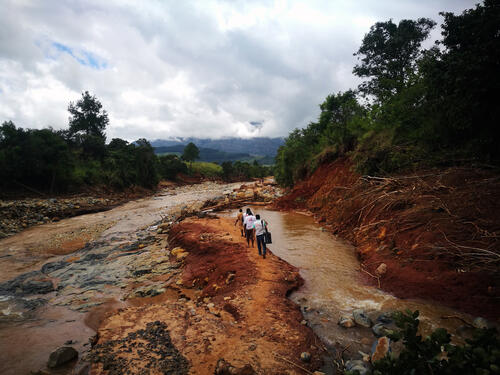
An Overview of MSF’s Approach to Climate, Environment, and Health
From Pledges to Progress: MSF’s Climate Initiatives in Action
To put these commitments into practice, MSF has launched several key initiatives. The Humanitarian Action for Climate and Environment (HACE), set up in 2020, supports climate and environmental adaptation by developing operational tools, facilitating a community of practice, strengthening staff capacity, and driving relevant research. On the mitigation side, the Climate Smart TIC project (now partly integrated within the International Office) led the work to reduce emissions, cut waste, and expand the use of solar power - with the aim of halving MSF’s emissions by 2030.
In complementarity, Climate, Environment, and Health (CEH) focal points have been established across each operational directorate to help embed climate and environmental considerations into key strategies and day-to-day operations. Operational Directorates have also launched or strengthen key departments - such as environmental health, public health and planetary health, - to help drive climate and environmental efforts forward.
MSF’s research and advocacy have also helped push this agenda forward. Since 2018, MSF has contributed to the Lancet Countdown on Health and Climate Change, bringing field-based perspectives to global policy discussions. Partnerships with UN agencies, the Red Cross Red Crescent Climate Centre, and other humanitarian organisations are helping to strengthen best practices in climate adaptation and mitigation - further positioning MSF as a committed actor in climate-aware humanitarian action.
MSF Climate Commitments
msf.orgMSF signs on to the the Climate and Environment Charter for Humanitarian Organizations
Building on the 2020 Environmental Pact, MSF pledged to significantly reduce emissions and joined nearly 200 organizations in signing the Climate and Environment Charter for Humanitarian Organizations in 2022. Led by the ICRC and IFRC, the Charter promotes climate action within the humanitarian sector, addressing both the growing risks of climate change and its environmental footprint.
“The climate and environmental crises are humanitarian crises, disproportionately affecting the poorest and most marginalized communities. These crises compound existing vulnerabilities such as conflict, displacement, poverty, and structural inequities, threatening lives and livelihoods worldwide.” – MSF

Carbon Emissions pledge
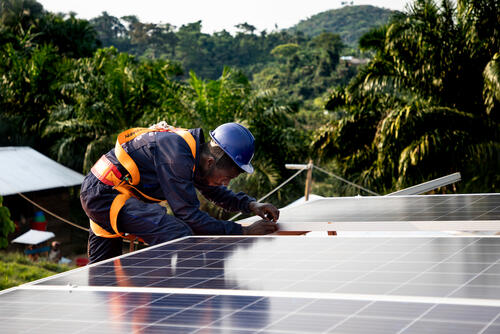
MSF commits to reduce carbon emissions to help safeguard the most vulnerable
In a step towards combatting the climate emergency, we have pledged to reduce our emissions by at least 50 per cent compared to 2019 levels by 2030.
