


In 2016, Médecins Sans Frontières (MSF) renewed its operations in Angola after an absence of nine years, supporting local authorities after an outbreak of yellow fever affected the country.
We consolidated our operations in 2017 and 2018, supporting the health authorities to respond to emergencies - from the water, sanitation and healthcare needs of more than 30,000 people who had fled conflict in neighbouring Democratic Republic of Congo to tackling outbreaks of cholera and malaria.
In 2022, we returned to Angola to improve paediatric care for malnutrition and malaria and prepare for the possible consequences of drought on people’s health. Our projects ended in August 2023.
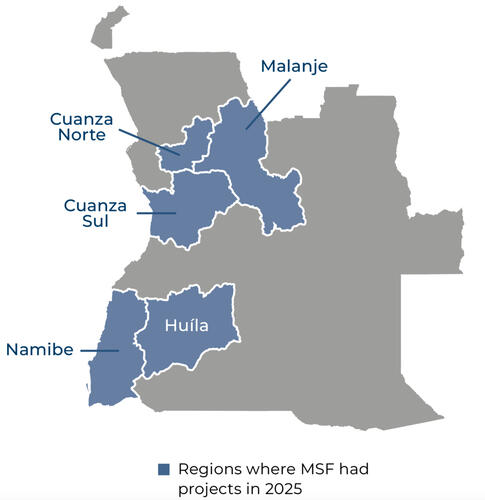
In January 2025, we responded to a cholera outbreak, working with and training health staff, and supporting the oral cholera vaccination campaign. Our activities concluded in July.
Our activities in Angola in 2025
Data and information from the International Activity Report 2025.
3
3
0.5 M€
0.5M
1983
1983
MSF in Angola in 2025
In Angola, Médecins Sans Frontières (MSF) responded to a widespread cholera outbreak in 2025, helping people access treatment, safe water, and information on how to prevent infection and death.

1,670
1,67
Filter Tips
- Try a different country, year, format, or topic.
- Clear one or more filters