


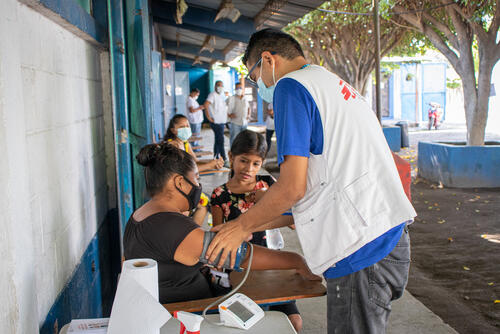
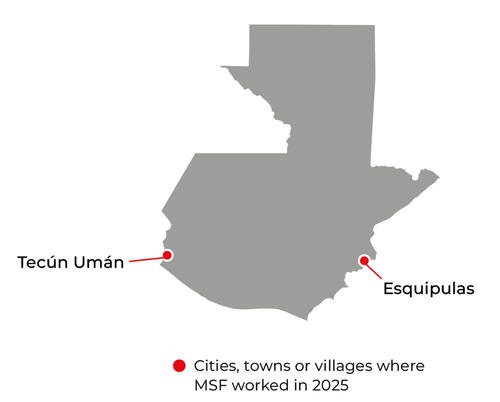
From 2021 until June 2025, MSF ran a project focused on care for migrants in Ciudad Tecún Umán, a city close to the border with Mexico, and Esquipulas, a municipality close to the border with Honduras. The services we provided included general medical and psychological care. Through this project, which we closed due to the impacts of the United States government’s migration policies, we provided care to over 238,000 people. We have intermittently worked in Guatemala since 1984.
Our activities in 2025 in Guatemala
Data and information from the International Activity Report 2025.
32
32
1.4 M€
1.4M
1984
1984
MSF in Guatemala in 2025
In 2025, Médecins Sans Frontières (MSF) concluded a project for people on the move in Guatemala, as the number transiting the country declined sharply.

1,890
1,89
260
26
190
19
29
29
Filter Tips
- Try a different country, year, format, or topic.
- Clear one or more filters