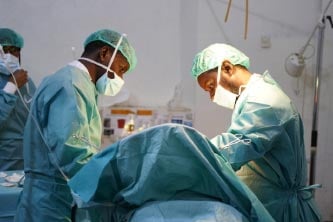
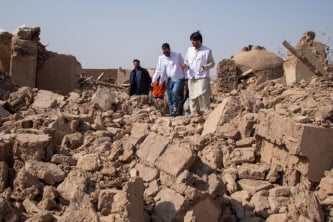
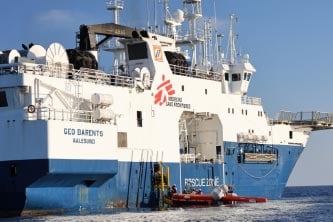
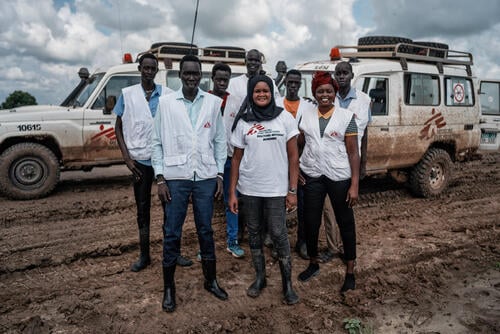
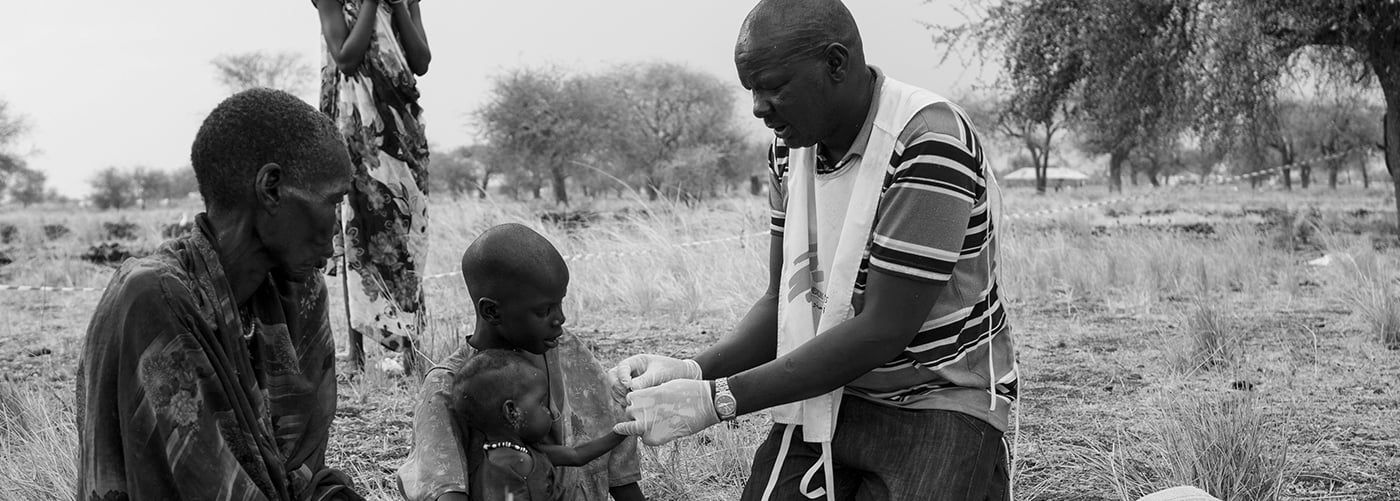

In 2025, over 65,000 people worked with Médecins Sans Frontières and contributed to giving lifesaving medical assistance to people who would otherwise be denied access to healthcare, clean water and shelter.
A large majority of MSF staff, about 90 per cent, are locally hired in their country of residence, working for MSF assistance programmes in proximity with the people and communities we support, or in MSF offices around the world.
About 10 per cent of people working for MSF are mobile staff recruited internationally to carry out assignments in countries where we have programmes. See here for more information on the typical job profiles of mobile staff.
MSF doesn’t employ only doctors and nurses. To fulfill our social mission, we recruit employees from a large range of professions in the medical, finance, logistics, IT, administration, human resources, and communications fields, as well as in other areas.
If you would like to work with MSF, you will find information about our behaviour commitments, minimum requirements, our recruitment processes and our current international job vacancies.
To know more about MSF’s rewards policies, you can also visit msf.org/rewards.
MSF has section offices in 26 countries and 16 MSF branch offices. View the worldwide map of MSF offices.
Our behavioural commitments
The integrity of our organisation is upheld by the good conduct of each individual staff member, in any location, with full respect for the communities we serve.
When you join us, we expect you to commit to our social mission and Charter; helping to deliver medical assistance to communities in distress and to people affected by natural or man-made disasters.
For us, this means not tolerating any behaviour from our staff that exploits the vulnerability of others, or of employees taking advantage of their position for personal gain.
We do not tolerate any physical or psychological abuse against individuals, sexual harassment, sexual relations with minors, or any behaviour that does not respect human dignity.
MSF promotes a working environment free of harassment and abuse. Our leadership has unequivocally committed to fight abuse and to reinforce mechanisms and procedures to prevent and address it.
The MSF Charter
The MSF Charter, which you can find on this page, defines the principles that members of the MSF associations have agreed to honour. The principles inscribed in the Charter apply to all staff and volunteers and form one of the cornerstones of MSF’s rewards system.
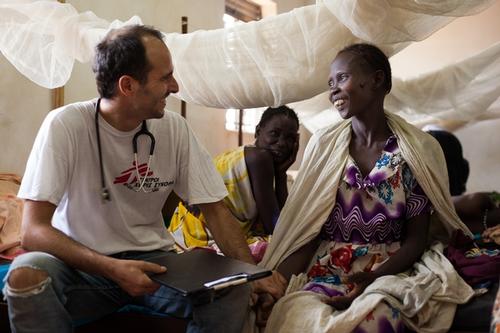
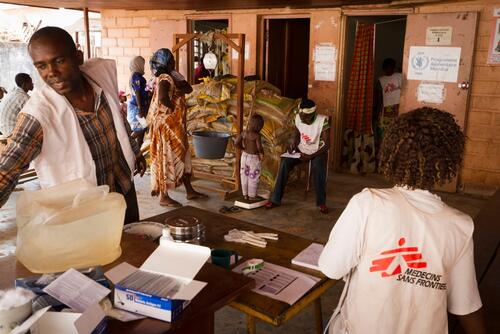
Video
Welcome to Médecins Sans Frontières/Doctors Without Borders
MSF's value proposition
MSF is looking for people who are committed to our social mission, with personal qualities to support our approach and values.
In exchange, MSF offers meaningful medical humanitarian work, development and professional growth, and rewards commensurate with responsibility and capacity. Our aligned global policies are anchored on our commitment as a socially responsible employer and support consistent treatment of staff and their mobility across the organisation.
MSF’s global human resources (HR) approach
MSF’s global HR principles, guidelines, and policies take into account and combine a variety of factors and establish the right balance between the needs of individual staff and the organisation. These include:
- Operational needs: MSF’s emergency response capacity is at the core of our social mission and HR policies must ensure that the right people are in the right place to respond to the needs of communities we serve, especially in insecure operational contexts.
- Workforce characteristics: employing staff from more than 150 countries in more than 100 countries means MSF has a very diverse workforce, with different needs, and different personal and cultural characteristics. MSF considers our diverse needs when designing rewards policies and balances this with the necessity of ensuring similar jobs and functions across our organisation get similar rewards. To do this, we have developed transparent global standards applicable to our global workforce.
- Global workforce and contextual diversity: This underpins MSF’s approach to rewards, with global rewards policies and frameworks that reflect our organisation’s principles and provide transparency. These are implemented consistently across the more than 100 countries where MSF employs staff, considering their respective labour markets, as well as statutory and regulatory environments.
- Organisational model: MSF is made of many different legal entities which all contract staff. We also have a governance model where many of the entities are represented and need to agree and then adopt HR policies that apply to all. Changing HR policies can take several years because of this complexity.
MSF values social dialogue between its employees, their management and its overall leadership, and views open exchanges on their work conditions and remuneration as a positive contribution to the organisation’s social mission. Read more about staff representation.
Filter Tips
- Try a different country, year, format, or topic.
- Clear one or more filters