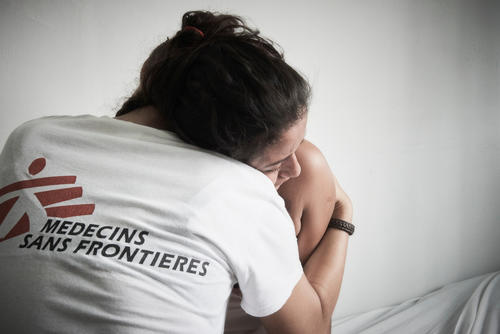
Read the policies, reports, and plans on how we address issues like racism and reduce our carbon footprint, ensuring our actions align with the highest ethical standards.
In more than 70 countries, Médecins Sans Frontières provides medical humanitarian assistance to save lives and ease the suffering of people in crisis situations.
MSF Access pushes for access to, and the development of, life-saving and life-prolonging medicines, diagnostic tests and vaccines for people in our programmes and beyond.
Based in Paris, CRASH conducts and directs studies and analysis of MSF actions. They participate in internal training sessions and assessment missions in the field.
Based in Geneva, UREPH (or Research Unit) aims to improve the way MSF projects are implemented in the field and to participate in critical thinking on humanitarian and medical action.
Based in Brussels, MSF Analysis intends to stimulate reflection and debate on humanitarian topics organised around the themes of migration, refugees, aid access, health policy and the environment in which aid operates.
This logistical and supply centre in Brussels provides storage of and delivers medical equipment, logistics and drugs for international purchases for MSF missions.
This supply and logistics centre in Bordeaux, France, provides warehousing and delivery of medical equipment, logistics and drugs for international purchases for MSF missions.
This logistical centre in Amsterdam purchases, tests, and stores equipment including vehicles, communications material, power supplies, water-processing facilities and nutritional supplements.
BRAMU specialises in neglected tropical diseases, such as dengue and Chagas, and other infectious diseases. This medical unit is based in Rio de Janeiro, Brazil.
Our medical guidelines are based on scientific data collected from MSF’s experiences, the World Health Organization (WHO), other renowned international medical institutions, and medical and scientific journals.
Providing epidemiological expertise to underpin our operations, conducting research and training to support our goal of providing medical aid in areas where people are affected by conflict, epidemics, disasters, or excluded from health care.
Evaluation Units have been established in Vienna, Stockholm, and Paris, assessing the potential and limitations of medical humanitarian action, thereby enhancing the effectiveness of our medical humanitarian work.
MSF works with LGBTQI+ populations in many settings over the last 25-30 years. LGBTQI+ people face healthcare disparities with limited access to care and higher disease rates than the general population.
The Luxembourg Operational Research (LuxOR) unit coordinates field research projects and operational research training, and provides support for documentation activities and routine data collection.
The MSF Paediatric Days is an event for paediatric field staff, policy makers and academia to exchange ideas, align efforts, inspire and share frontline research to advance urgent paediatric issues of direct concern for the humanitarian field.
The MSF Foundation aims to create a fertile arena for logistics and medical knowledge-sharing to meet the needs of MSF and the humanitarian sector as a whole.
A collaborative, patients’ needs-driven, non-profit drug research and development organisation that is developing new treatments for neglected diseases, founded in 2003 by seven organisations from around the world.
Noma is a preventable and treatable neglected disease, but 90 per cent of people will die within the first two weeks of infection if they do not receive treatment.
The GeoMSF platform is a dynamic one-stop-shop website for all of MSF's GIS related services and products. Access maps and applications through the catalogue, request geographical support, or produce a map on GeoMSF.
A coleção de Fotos do Ano de MSF faz a retrospectiva de um ano de fornecimento de cuidados médicos em condições e contextos extremos em todo o mundo. Através da lente de fotojornalistas e dos nossos fotógrafos, MSF lembra e presta homenagem àqueles que lutaram, aqueles que perseveraram e aqueles que pereceram.
Desde guerras e conflitos civis, até doenças e epidemias, passando por desastres naturais, os profissionais de MSF esteviveram na linha de frente para salvar vidas em 2017. Nossos talentosos e dedicados fotógrafos estiveram lá a cada passo do caminho para testemunhar as histórias do ano passado, capturando o trabalho de nossas equipes e a batalha em curso para salvar aqueles em perigo em nosso mundo.
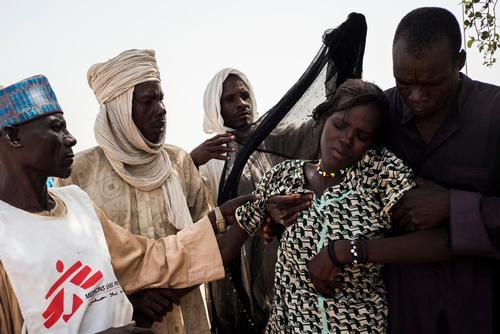
Uma jovem, de um campo de deslocados internos na cidade de Yakoua, é transportada depois de viajar mais de 30 km em um cavalo e uma pequena charrete para chegar à clínica móvel de MSF perto de Bol, Chade.
Dominic Nahr
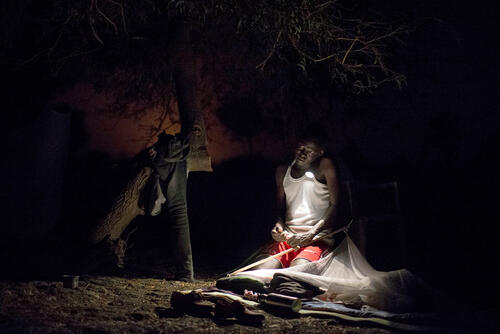
Março de 2017 - James, um Supervisor de Área Comunitária que trabalha com MSF, organiza sua cama para a noite perto de uma clínica de apoio a céu aberto de MSF em Gier, Leer County, Sudão do Sul.
Siegfried Modola
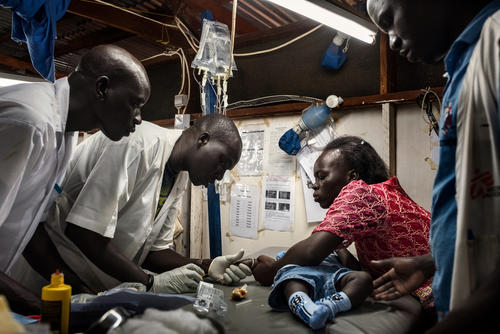
Agosto de 2017 - Os médicos examinam o bebê Bless - milagre, em português - de sete meses, no hospital de MSF em Aweil, Sudão do Sul. Bakhita (à direita), que é uma parteira de MSF no mesmo hospital, trouxe seu filho com a suspeita de que ele está com malária.
Peter Bauza
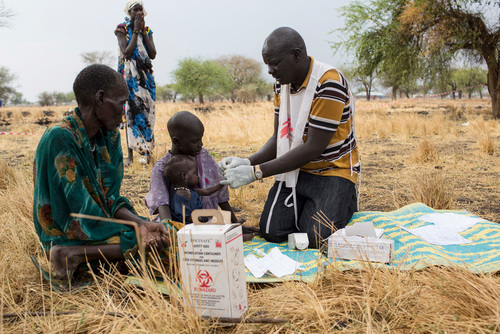
Março de 2017 - O promotor comunitário de saúde, Gatbel, testa uma criança para a malária em uma clínica de apoio a céu aberto em Thaker, Leer County, Sudão do Sul.
Siegfried Modola
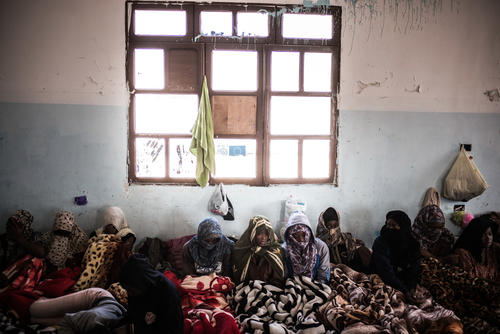
Março de 2017 - Amontoadas com pouco mais do que um cobertor e as roupas que vestem, mulheres detidas são mantidas no centro de detenção de Sorman, a cerca de 60 km a oeste de Trípoli, na Líbia. Detidas pelas autoridades da Líbia por viajarem pelo país na tentativa de chegar à costa e embarcar em um barco de traficantes para a Europa, as mulheres enfrentam semanas, se não meses, de incerteza enquanto são mantidas em condições horríveis.
Guillaume Binet/Myop
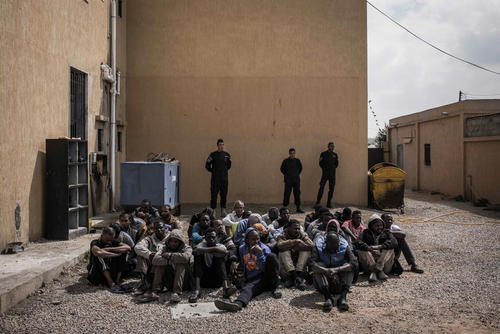
Março de 2017 - Homens detidos no centro de detenção Janzour, nos arredores de Trípoli, Líbia. Os detidos passam dias e meses em centros de detenção na Líbia, sem qualquer ideia de quando serão libertados. A Líbia é um estado sem lei fragmentado por conflitos e é tanto um destino como um local de trânsito para centenas de milhares de refugiados, requerentes de asilo e migrantes. Nos centros de detenção de migrantes, eles enfrentam detenção arbitrária por períodos prolongados de tempo em condições insalubres e desumanas. Não há como desafiar a legalidade de sua detenção e praticamente não existe acesso ao mundo exterior. Maus-tratos e falta de acesso a cuidados médicos são comuns.
Guillaume Binet/Myop
Desde a sua chegada a Cagliari, 'M' começou sua longa jornada pela Europa, levando-o da Sardenha para Milão, passando por Ventimiglia e Como. Ele testemunhou a morte de seu amigo e companheiro de viagem que perdeu sua vida em um trágico acidente de trânsito enquanto os dois tentavam atravessar para a França. M foi enviado de volta, primeiro da França e depois da Suíça. Ele agora espera, preso no lado italiano da fronteira, em Como.
Giuseppe La Rosa/MSF
Sally, 29, de Nasiriyah no Iraque, fugiu de espancamentos e violência depois de se divorciar de seu marido. Ela chegou a Grécia de barco pela Turquia, ao lado de outros refugiados, e agora mora em Atenas, onde está aprendendo grego e recebe aconselhamento de MSF.
Tanya Habjouqa/NOOR
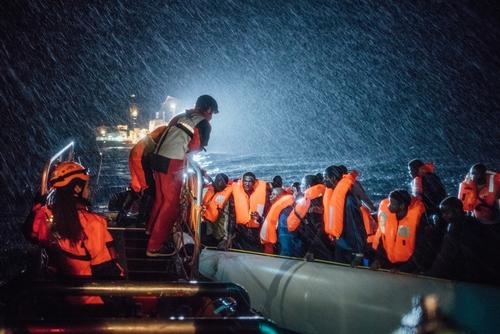
Dezembro de 2016 - Os socorristas da SOS Mediterranee, ONG com a qual MSF tem parceria, embarcam no navio de busca e resgate Aquarius, distribuem coletes salva-vidas em mares revoltos e sob fortes chuvas para refugiados à deriva em um pequeno barco inflável no Mar Mediterrâneo.
Kevin McElvaney
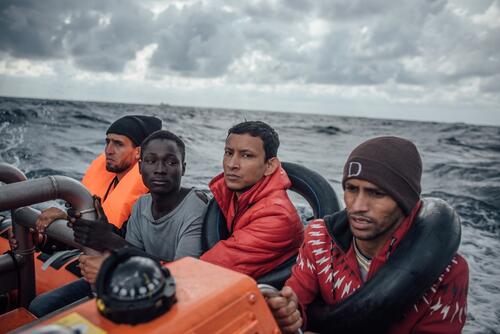
Dezembro de 2016 - Jovens seguram-se firme enquanto uma lancha rápida transfere-os de seu barco de madeira para o navio de busca e resgate de MSF /SOS, Aquarius, nos mares agitados do Mediterrâneo, ao largo da costa norte da Líbia.
Kevin McElvaney
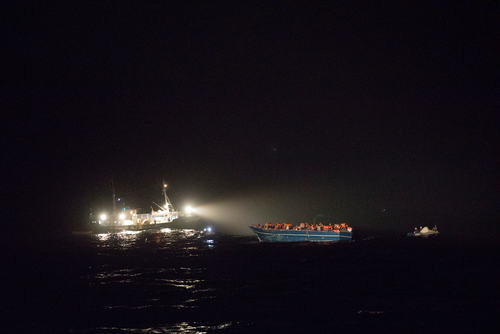
Março de 2017 - Um barco de madeira com 412 pessoas a bordo, principalmente de países asiáticos como Paquistão, Bangladesh e Nepal, é resgatado à noite pelo navio de busca e salvamento de MSF, Vos Prudence, e outros navios, no Mar Mediterrâneo.
Albert Masias/MSF
Junho de 2017 - Omayma, 21 anos, do Marrocos, fotografada nas águas internacionais, a meio caminho entre a Líbia e a Itália, no Mar Mediterrâneo. Da série 'A Travessia'.
Andrew McConnell/Panos Pictures
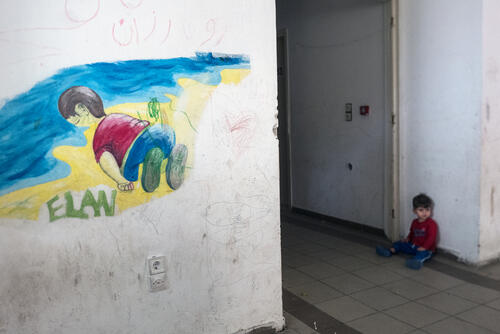
Junho de 2017 - Uma criança se senta em um corredor de um spa abandonado em Thermopylae, na Grécia. Os edifícios do resort estão sendo utilizados para abrigar refugiados. Lá, MSF presta cuidados de saúde mental àqueles que se encontram presos pela política de refugiados da UE, que os impede de continuar sua jornada pela Europa.
Tanya Habjouqa/NOOR
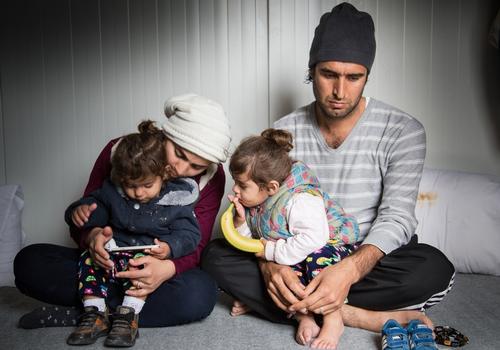
Março de 2017 - Karon, 31 anos, senta com sua esposa e suas filhas gêmeas em um abrigo de refugiados na ilha grega de Lesbos. A família chegou em agosto de 2016, mas foi impedida pelas autoridades gregas de deixar a ilha para continuar sua viagem até o continente.
"O que eu vi no Iraque, não quero que meus filhos vejam novamente. É por isso que nós deixamos nosso país, onde tudo está paralisado, tudo parou, não há vida... Meu verdadeiro sonho é que meus filhos vivam em um belo país, sem guerra, sem derramamento de sangue, sem nada disso. Essa é a única coisa que desejo".
Giuseppe La Rosa/MSF
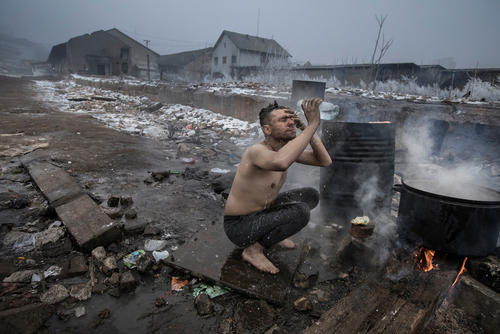
Janeiro de 2017 - Um homem se lava ao ar livre usando uma garrafa de plástico em um complexo de armazéns em desuso em Belgrado, na Sérvia. Muitas centenas de refugiados que atravessaram toda a Europa buscaram abrigo das temperaturas geladas do inverno sérvio, ao suas jornadas serem frustradas por controles de fronteira mais rigorosos.
Paul Hansen/Dagens Nyheter
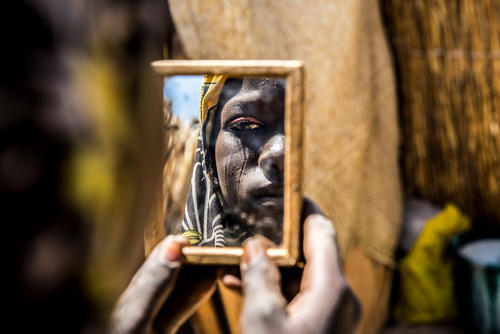
Fevereiro de 2017 - Uma mulher atendida em uma clínica pré-natal de MSF em Diffa, no Níger, olha seu reflexo em um espelho de mão.
Juan Carlos Tomasi/MSF
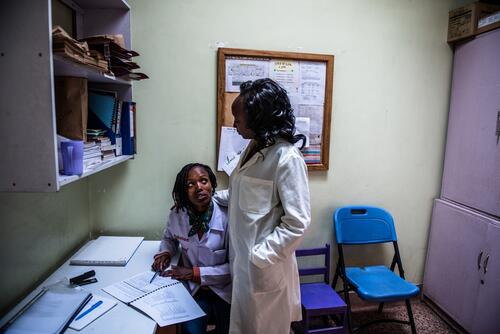
Agosto de 2017 - Profissionais da clínica de MSF em Eastland, Nairobi, cuidam de sobreviventes de violência sexual e de gênero. A clínica 24 horas atende mais de 200 pacientes por mês devido ao fato de que MSF expandiu sua área de atuação com um serviço de ambulância, um centro de atendimento de telefonemas e por meio de um projeto de conscientização e mobilização da comunidade.
Fredrik Lerneryd
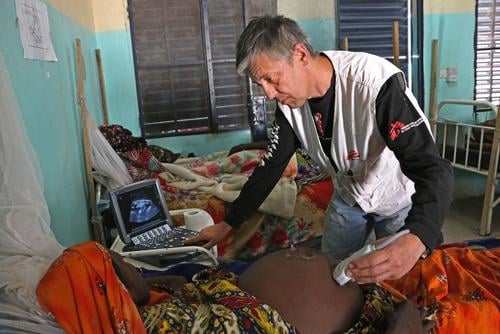
Fevereiro de 2017 - Dr. Henryk Mazurek, ginecologista-obstetra de MSF no hospital regional de Bol, realiza um ultrassom em uma paciente que está prestes a ter gêmeos, antes da cirurgia obstétrica.
Sara Creta/MSF
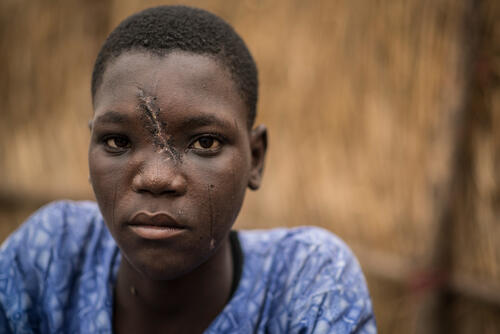
Toudjani Boulama, 18 anos, foi tratado por MSF por conta da ferida que tem no rosto depois de ter sido baleado por um membro do Boko Haram nos Camarões. Toudjani e cerca de 45 mil refugiados vivem atualmente em um campo para deslocados internos em Ngala, Borno, Nigéria. Muitas pessoas fugiram do vizinho Camarões devido à violência perpetrada pelo Boko Haram e pelas operações militares na área.
Sylvain Cherkaoui/COSMOS
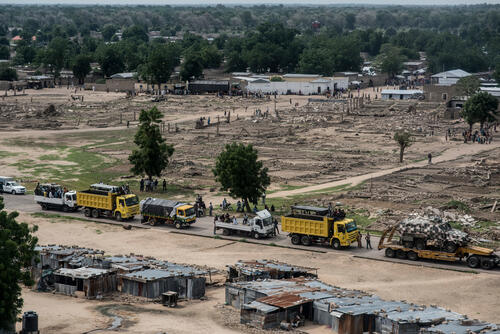
Julho de 2017 - Um comboio de segurança se prepara para deixar o campo de deslocados internos em Banki, no nordeste da Nigéria. O campo foi estabelecido pelas autoridades nigerianas depois que a cidade foi retomada do Boko Haram em setembro de 2015. Devido ao Boko Haram, que permanece na área, não é seguro ir embora. MSF fornece cuidados médicos, saneamento e distribuição de alimentos. Uma equipe médica móvel fornece tratamento preventivo de malária para crianças durante a estação chuvosa.
Sylvain Cherkaoui/COSMOS
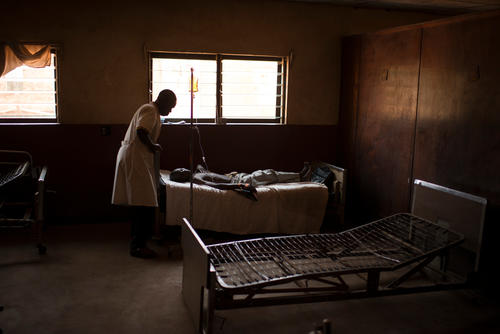
Abril de 2017 - Zahardien Musa, um paciente de meningite de 14 anos de idade de Sokoto, descansa em sua cama com seu pai no Hospital Especializado de Muhammed Murtala.
Fabrice Caterini/INEDIZ
Março de 2017 - Um médico examina um paciente no Centro Médico Batista, apoiado por MSF, em Ippy, República Centro-Africana.
Colin Delfosse/Ouf of Focus
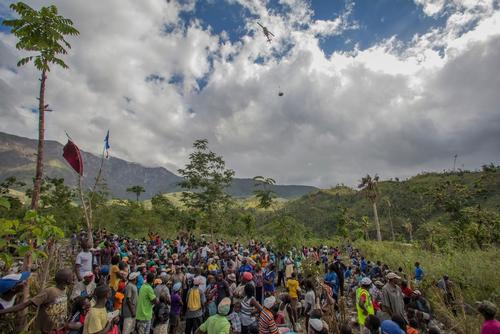
Janeiro de 2017 - Residentes de Bolosse, nas montanhas haitianas, observam a chegada por helicóptero de um pacote de ajuda médica de MSF e materiais de construção. MSF está distribuindo kits de ajuda em algumas das áreas mais remotas do país depois da devastação do furacão Matthew.
Jeanty Junior Augustin
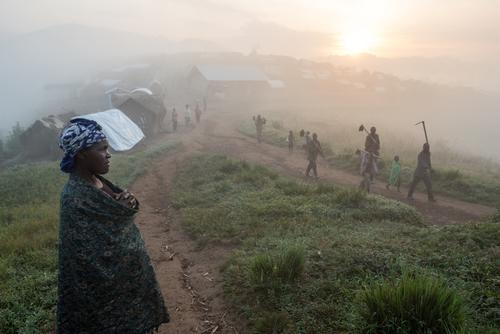
Fevereiro de 2017 - Dawn olha o campo de deslocados internos em Mweso, estado de Kivu do Norte, no leste da República Democrática do Congo. O campo, criado em 2007, está localizado a cerca de 120 quilômetros da capital do Kivu do Norte, Goma.
Gwenn Dubourthoumieu
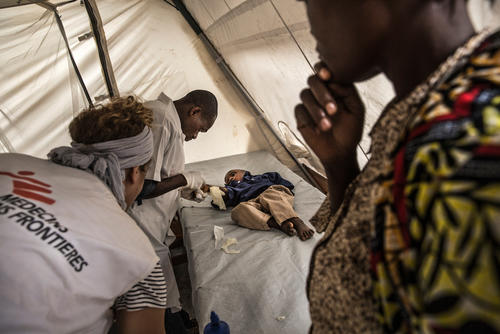
Outubro de 2017 - Enfermeiras de MSF examinam uma criança no centro de tratamento de cólera em Katana, República Democrática do Congo.
Marta Soszynska/MSF
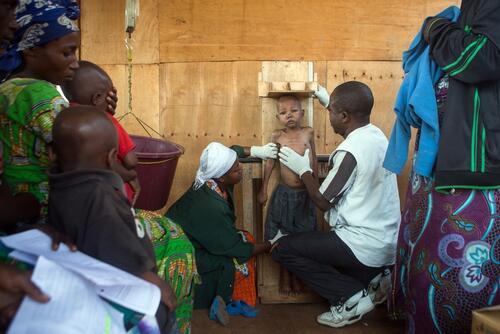
Fevereiro de 2017 - Uma criança com desnutrição grave espera, enquanto a equipe de MSF mede sua altura em um centro de saúde apoiado por MSF em Bukama, Masisi, República Democrática do Congo.
Gwenn Dubourthoumieu
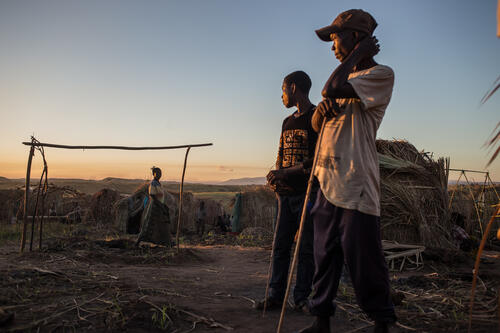
Maio de 2017 - Homens deslocados por combates intercomunitários na província de Tanganyika construíram um abrigo no campo de Mukuku em Kalemie, República Democrática do Congo. Cerca de 433.700 pessoas foram deslocadas desde julho de 2016. Muitos vivem em acampamentos informais e campos com acesso limitado a cuidados de saúde e enfrentam escassez alarmante de alimentos, água e abrigo.
Lena Mucha
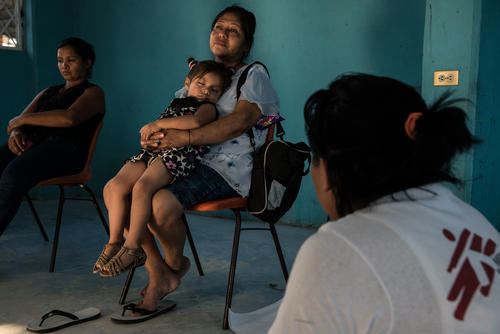
Março de 2017 - Uma mulher dá colo à sua neta durante uma sessão de apoio de MSF para mulheres em um abrigo para migrantes em Tenosique, no México. De acordo com uma pesquisa de MSF, quase um terço das mulheres que atravessam o México em suas jornadas de migração sofrem abusos sexuais.
Marta Soszynska/MSF
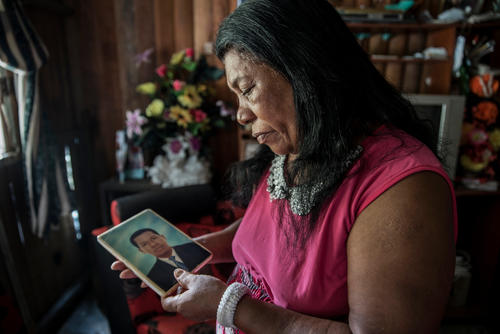
Dezembro de 2016 - Francisca, 77 anos, olha para uma foto de seu filho que morreu há seis anos no distrito Brisas del Mar de Buenaventura, na Colômbia. Ela vive há 32 anos no bairro. Buenaventura está situado na costa do Pacífico colombiano. A cidade ganhou notoriedade por ter as maiores taxas de criminalidade do país, onde uma grande parte da população é exposta diariamente aos atos de violência, incluindo assassinatos, tiroteios, extorsão, sequestros e abuso sexual.
Marta Soszynska/MSF
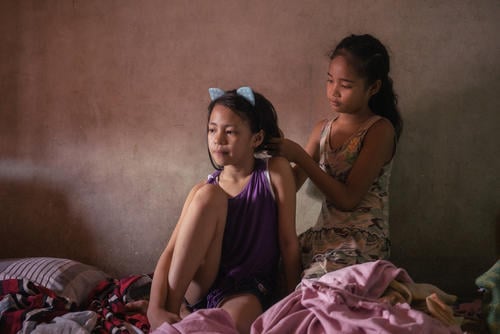
Setembro de 2017 - Elyes (à esquerda) e Diana penteiam o cabelo uma da outra antes de posar para um retrato em sua casa perto de Smokey Mountain, Manila. Ambas as meninas foram vacinadas na clínica de Likhaan, que oferece cuidados de saúde gratuitos para comunidades de baixa renda. Para muitos membros de comunidades de baixa renda em Manila, buscar bens básicos, como alimentos, abrigo e roupas, tem prioridade sobre suas necessidades de saúde.
Hannah Reyes Morales
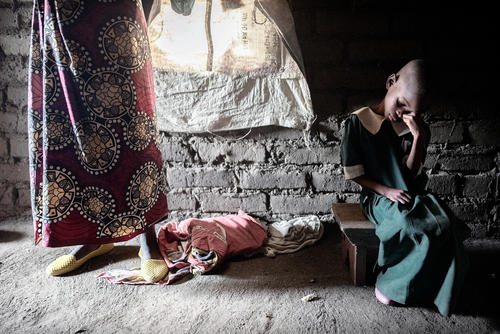
Julho de 2017 - Gloria Chipasula, de 11 anos de idade, senta-se vestindo o vestido da escola, enquanto sua mãe, Teleza James, permanece ao lado dela em sua casa em Nsanje, no Malaui. Gloria vive com HIV e está co-infectada com TB.
Luca Sola
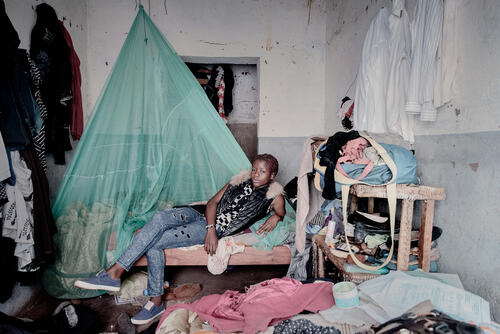
Julho de 2017 - Debora Njala, 18 anos, em sua cama em Chiradzulu. Deborah contraiu o HIV de sua mãe durante a gravidez. Apesar de testar positivo para a tuberculose, ela é inabalável: "Com medicação adequada, vou alcançar meus sonhos e o futuro é brilhante".
Luca Sola
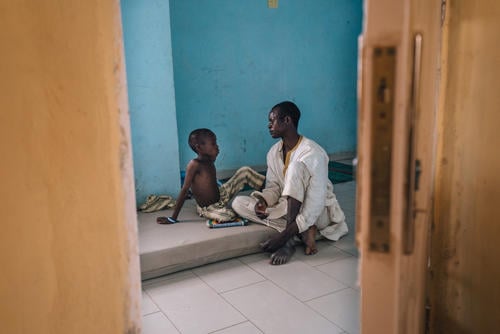
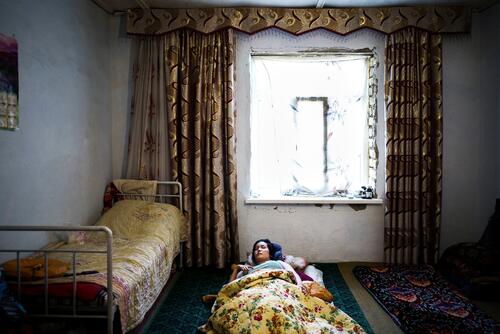
Gulzat, 17 anos, recebe uma visita da equipe médica de MSF em casa. Gulzat teve meningite tuberculosa há dois anos e, apesar do tratamento médico, não se recuperou completamente. Ela está paralisada e inteiramente dependente de seus parentes para os cuidados do dia a dia. MSF apoia Gulzat como paciente de cuidados paliativos, ajudando a fornecer medicamentos e financiar uma variedade de seus custos médicos.
Maxime Fossat
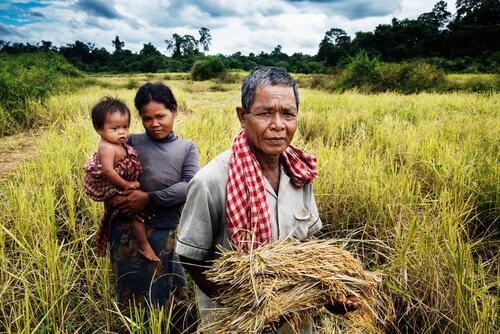
Janeiro de 2017 - Saom Koem (direita) mora com sua esposa, filha, genro e neto em Pni Ro Luk, durante as estações de plantio e colheita. Há dois anos, Saom Koem contraiu malária, mas foi tratado. Este ano, toda a família participou do projeto de triagem voluntária proativa para a malária.
Tim Dirven/Panos Pictures
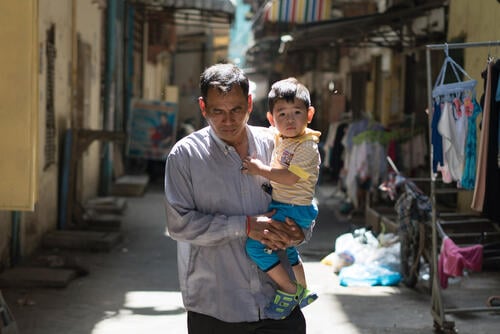
Abril de 2017 - Din Savorn, um ex-policial de Phnom Penh, de 50 anos de idade, ficou extasiado quando descobriu que finalmente fora curado da hepatite C. Depois de viver com a doença por quase 20 anos, Din foi uma das primeiras pessoas a serem tratadas com um novo e mais eficaz tratamento para a hepatite C, oferecido gratuitamente pela clínica de MSF em Phnom Penh.
Todd Brown
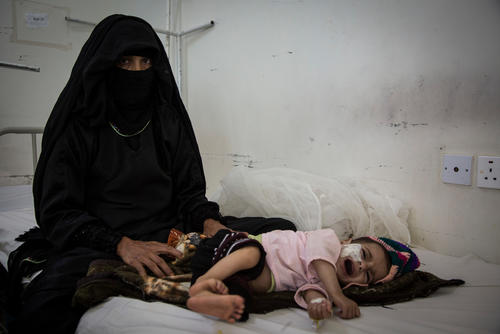
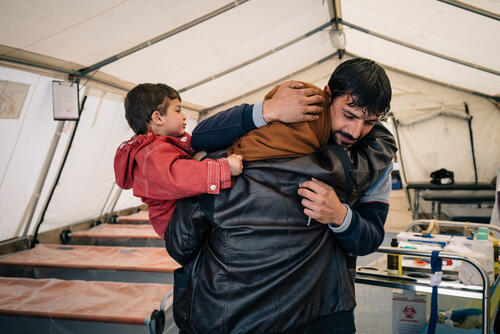
Besam traz seu filho de sete meses ao centro de saúde para ser examinado, depois que ele apresentou febre alta e vomitou. A criança está desnutrida, mas de acordo com o médico, esses casos ocorrem com muita frequência. "As mães deixam de amamentar e substituem o leite materno por leite em pó, mas a água não está limpa e as crianças estão muito doentes".
Florian SERIEX/MSF
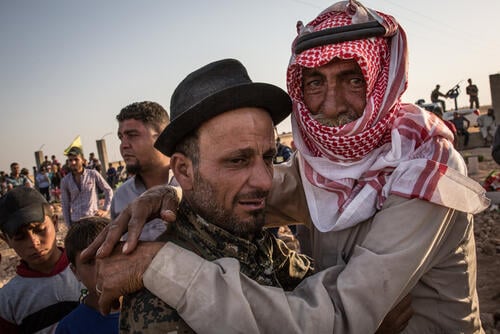
Julho de 2017 - Dois homens se abraçaram, com lágrimas nos olhos, durante um funeral, em Tal Abyad, de homens locais que lutaram e morreram na batalha por Raqqa.
Chris Huby
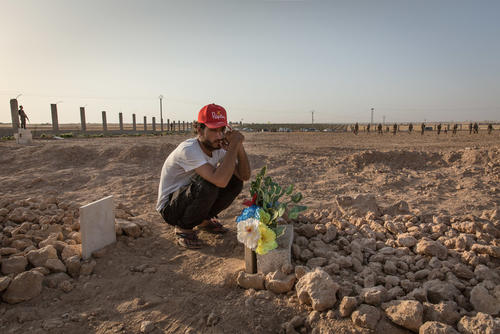
Julho de 2017 - Ismael olha o túmulo de seu amigo, Hout, que foi morto dois dias antes por um atirador do Estado islâmico na batalha por Raqqa. Um campo localizado em Ain Issa, 55 km ao norte de Raqqa, abriga cerca de 8 mil pessoas que foram deslocadas pela guerra. As equipes de MSF gerenciam o abastecimento de água e estão fornecendo cuidados de saúde primária e estabilizando pacientes feridos antes de encaminhar os casos mais graves para o hospital de Kobane.
Chris Huby
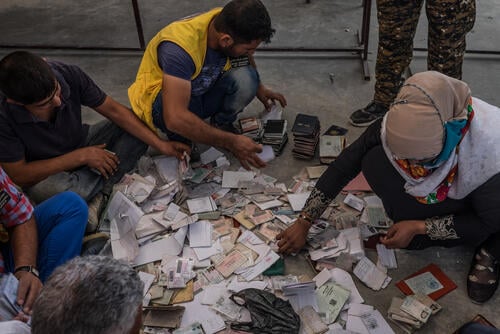
Setembro 2017 - Os membros do conselho civil de Raqqa organizam cartões de identidade e passaportes entregues pelos recém-chegados ao campo Ain Issa para deslocados internos no norte da Síria. As áreas civis em Raqqa e seus arredores foram seguidamente bombardeadas e privadas de assistência. O acesso a alimentos e cuidados de saúde permanece extremamente precário, especialmente em áreas submetidas a cerco prolongado.
Agnes Varraine-Leca
Um irmão e uma irmã se reencontraram no centro de trauma de MSF, ao sul de Mosul, no Iraque. Os irmãos não se viam há mais de dois anos devido ao conflito e se encontraram novamente por acaso neste hospital depois que a filha da mulher foi levada para ser tratada por ferimentos leves.
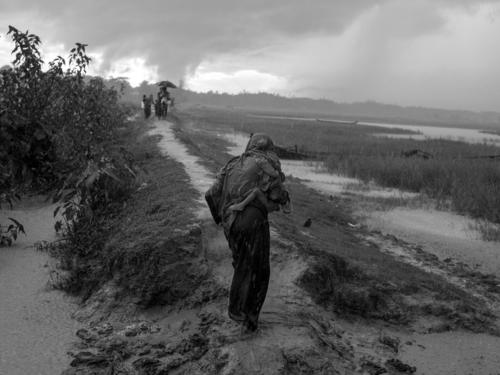
Outubro de 2017 - Refugiados Rohingya, de Mianmar, buscam abrigo das chuvas de monção em um campo de arroz no lado bengali da fronteira com Mianma enquanto aguardam permissão dos guardas de fronteira de Bangladesh para continuar sua jornada para os campos de refugiados perto de Cox´s Bazar.
Moises Saman/Magnum Photos for MSF
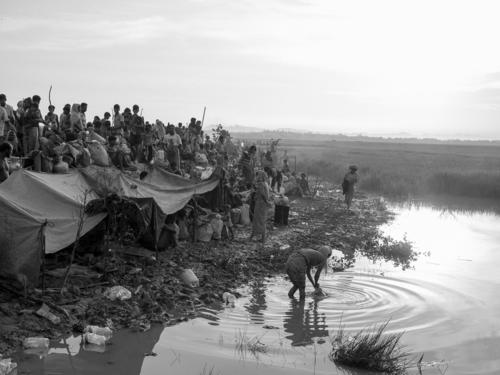
Outubro de 2017 - Os refugiados Rohingya de Mianmar se reúnem no lado bengali do rio Naf à espera de permissão para continuar sua jornada para os campos de refugiados perto de Cox´s Bazar.
Moises Saman/Magnum Photos for MSF
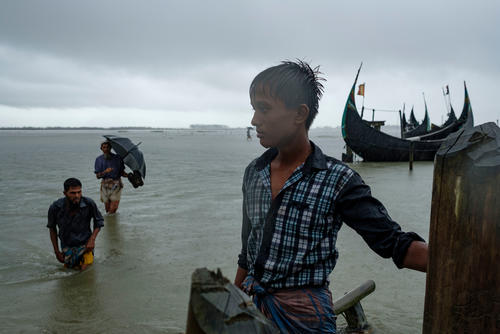
Setembro de 2017 - Um garoto bengali local observa os refugiados Rohingya que chegam sob chuva torrencial em um cruzamento de fronteira no rio Naf, perto de Teknaf, depois de fugir de Mianmar. Mais de 600 mil Rohingya fugiram para Bangladesh do estado de Rakhine, em Mianmar, após uma escalada de violência em agosto.
Antonio Faccilongo
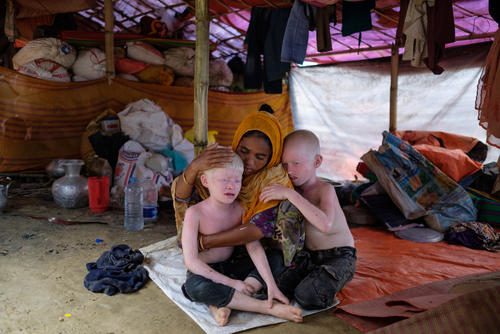
Setembro de 2017 - Uma mulher Rohingya conforta seus dois filhos em sua barraca no campo de Kutupalong em Cox's Bazar, Bangladesh. A família fugiu recentemente de Mianmar, se juntando a centenas de milhares de Rohingya que escaparam pela fronteira durante episódios de violência em anos anteriores, se instalando em acampamentos improvisados sem acesso adequado a abrigo, comida, água limpa ou saneamento adequado.
Antonio Faccilongo
Cinthya, 18 anos, recebe um abraço de uma enfermeira de MSF na clínica de Choloma para cuidados de saúde física e mental, depois de sofrer violência doméstica. Ela está grávida de dois meses. MSF apoia uma clínica materno-infantil em Choloma, uma área industrial em rápida expansão e agora a terceira cidade mais populosa de Honduras, notória por seu alto nível de violência.
Christina Simons/MSF



![Um Ahmad (Sally Saad, 29)
Received MSF mental health counseling
(Today, Sally is living with a female refugee from West Africa and exploring her body as canvas of expression. Her body is her own for first time in years. Her favorite new tattoo? I suffered I learned I changed. She is learning Greek and receiving counseling from MSF)
Divorce was not easy….my husband was from Basra, and I am from Nasiriyah.
Iraq has a tribal way of living. Everybody gets involved like the uncles and the father. Despite being beaten violently, they all intervened, and I was coerced to return home.
They took me back under the pretext that it was for the children. It was inevitable for the families to intervene because they don’t want to develop a reputation due to divorce and the children.
This cycle continued for years. It was worse when my husband joined the army. He broke my jaw, when my daughter Rula was a year and a half old.
She doesn’t remember any of it, but my older son does. He was three years old.
He was beginning to understand what was going on.
After joining army, only thing that changed was that his dominance had become undisputed.
He had acquired authority and power. Guns! Can you believe that? He hit me with guns twice. Another time he pulled a gun on me. Once he assaulted me here… [She indicates a delicate part of her body]
In 2014, I had had enough.
I stayed with my family for about eight months. The kids stayed with me. In the beginning, he took them claiming that it would only be a visit. He told my father that he wanted to see the children and asked for them to be sent over.
I had a feeling it would be the last time. And indeed, he took them and kept them.
Afterwards, he informed that we were getting divorced. It came from him not from me because if I asked for it, society would have looked at me as if the fault were mine.
I waited for him to say it.
He wanted to get divorced but his condition was to have the children.
I refused, of course. He sent back agreeing to me keeping custody and things carried on.
I went to court. It was the first time we had seen each other after eight months; it happened at the courthouse. I was shocked to see that all the papers he had prepared entailed that he would have custody of the children, not me. He prepared papers to have custody of the children for himself.
Another thing is that he agreed with my older brother to have me give up everything. Everything.
Due to the condition I was in, I didn’t care. Honestly, I didn’t care about the gold or the money or anything. That was it. It meant to give up everything to be free from him.
The judge asked me if I was being threatened, because no woman would stand up and give everything up like that. We got divorced. I told him that I didn’t want any problems.
He threatened my mother, telling her that we did not want to see his “other face”.
Naturally, my mom felt scared for my siblings. I had fights with my mother throughout the whole winter.
We got divorced but I did not see any of children afterwards. Not once. Not even a phone call or a message. My life changed too; everybody looked at me differently. My family did too.
My oldest brother was the first to antagonize me. My mother did too.
My mother was scared and wanted me to forget what happened and go back to him, but… my children.I tried to get them back. I tried to rent a house. He would be legally obliged to pay their alimony. The law stipulates that he pays alimony while I rent a small house.
He had documents claiming that I had given up custody.
He claimed that by separating I agreed to give up custody.
I moved out of my family’s house at the time due to all the problems and the pressure that was mounting on me. I moved in with my aunt; my mother’s sister.
I tried to do something... I tried to get them back. I tried to see them.
I was surprised to see one of cars from my husband's family one day through the cameras at my family’s house. They were dressed in their tribe’s clothing.
They spoke with my mother and told her that I must forget about the children.
They said that as a tribe they are capable of doing anything. No government or country can intervene or do anything to stop them. It suddenly became a conflict between two tribes.
After that, my older brother said if that I didn’t go back to my husband, he’d kill me.
At the time, I felt like going back was not a way to live.
I tried to take the children and leave the country. I was able to get my passport out of the house.
My son snuck it out for me. I talked to him and said: “Hamodeh, I need something. Can you do it for me?”
I told him where the passport was and asked him to leave it at my neighbor’s. He just had to hide it for me there. I tried to get the children out of the house more than once, but I was surprised to know that he found out that my passport had been taken out of the house.
He figured I could leave the country, so he said if anything happened to the children or if any of them had been taken or if I had to come see them, he would take one of my brothers in return.
If you bring the children back, I’ll let your brother go. But if you don’t then it’s over.
I was conflicted; I had to choose between my children and my siblings.
I thought about leaving to escape the problems caused by my brother and ex-husband, so I wouldn’t go back. I went to Turkey. My best friend since seventh grade lives in Jordan and helped me.
She booked me a flight ticket from Jordan. She sent it to me via cellphone.
She got me out of my aunt’s house after they found out I was staying there. I went to her mother’s house.
I tried one thing… two days before I left, I went to the school.
I told them because I didn’t want them to think their mother had abandoned them, or that she just left.
He told me their father had told them that I didn’t want them. And that I gave them up.
I told them there was no truth to that.
I told them there is one thing I want to do, but I will only go forward with it if you accept, if not then I will stay. I told them I wanted to leave the country and I promised to take them with me.
That I would take them once I feel like I am capable of protecting them.
My daughter immediately said: “Mom, go and leave all of this behind.” She said that right away.
I was startled that my daughter was telling me to leave.
Hamodeh asked me to promise him to that I would take them, then said that once I was going to do it, he’d go to the courthouse and tell them he wants to live with his mother. I went to see Noor at the kindergarten. He was really upset and told me that his father was going to get married. It’s true; he got married one week after we divorced.
One week. He married right away. He gave her my house, my room, my stuff. All the same.
It was like a movie; I went to the house of my friend’s mother. I was scared and afraid someone would see me; it was the first time I had taken such a step.I was really scared when I went to the airport. I had turned my phone off. I passed through Baghdad airport as if I had passed through hell.
When I got to Turkey… my Jordanian friend sent her friend to meet at the airport right away.
She told him: “Keep Sally by your side,” because it was a new place and I knew nothing about it.
I was supposed to stay with him until she would arrive.
She booked a ticket and came to see me in Turkey. I haven’t heard my kids voices in six months.
I did see Rula once though, on the camera.
She recognized me so she told her father. He overheard them talking to each other so he figured out that I had phoned them. He hit Hamodeh and Rula when he found out. The neighbors told me.
Hamodeh is the bravest one of them; he isn’t scared. He would contact me from his friend’s house or facebook or send me messages. He tells me that he hasn’t forgotten about me but he is scared of his father. However, I haven’t heard a word from them since January. I know their news; the neighbor always visits and tells me afterwards.
When I arrived to Turkey, my friend told me that the only thing I would be able to get back is my children and that I would be able to live and relax. She encouraged me to cross the sea. She told me to leave.
I feel like I’m the victim of a society that rejects the idea of a woman getting divorced and then moving on with her life.
I left my children behind because my friend and my aunt got me to believe that I would be able to get them back once I got to Europe. I was shocked to discover that this were not the case.
It can only happen with his consent. Leaving Iraq requires the parents’ consent or after they turn 18 and make the choice themselves.
Another thing is that if I stayed in Greece, it would be difficult to bring them here. You can see how we live here, how will the children live?
If I got a job or built a life, even here in Greece, I would be able to care for them. I would not hesitate for a moment.
I got to university but never finished because I got married.
I took a deep breath of relief after getting the ID for “residency” in Athens. I felt like I had accomplished something.Despite the situation in Greece, I accomplished something.
I signed up at that university course today—to learn Greek and work to a new life.
They [the children] are fine, but they always ask about my whereabouts and want to talk to me. They are living through the same hardships I did.
I look at pictures or videos of them. I cry constantly. Sometimes I contact the neighbors just to hear their voices. Only then do I calm down. Sometimes I have this fear that they have forgotten about me.
I talked to him about two months ago; to the father. I asked him to just let me hear their voices and talk to them because I’m far away so it wouldn’t make any difference. I told him that I wanted to check on him and hear their voices, but they are scared of him. Every phone call ends abruptly after 2 minutes; Hamodeh would just say “dad is coming” and he’d hang up.
He had the same vileness, behavior and way of thinking. Blasphemy, explicit language. Just forget about it. Forget about it.
Every time I talk to Hamodeh, they ask me when I’m going to get married. I tell him this: “Habibi, I only have one person I love that I hope I get to be with. He is growing up and will be as tall as me soon. I hope he will be as tall as me or even taller when he gets to me. I will hug him, walk among the people and let them all know that he is the one I love. Don’t ever think that one day I would leave you or marry. It is never going to happen.”
I want him to keep that in mind because I truly wouldn’t do it. It would be difficult, especially for them.
I will never forget what the Turkish did. The boat carried around 300 people, all of which were children. The Turkish police kept filling up water until it reached here.
I didn’t care because I was exhausted. It didn’t matter whether we died or got to our destination. Greek police were just watching, doing nothing to help. The big boat which carried the Greek flag just watched through binoculars.
This was on the day of the agreement. I had the luck to take to the sea on this very day.
Two boys jumped into the water so the Turkish police were trying to get them on board of their ship. They did this for us, collectively, giving us a chance to get away as they focused on boys. We then arrived to the island. One of them did it so his brother would make it. What happened with the Turkish police was utterly unforgettable.The boat was full of water and the screams and crying of children.
I was taking pictures with my phone. One of the Turkish policemen saw me and gave me daunting looks. He started pointing at my phone and doing this with his hand. [Indicating he would “show me” when he got his hands on me]
He said: “Take all the photos you want; the phone will be confiscated anyway.”
When we came to the island, we informed [the Greek police]. They did nothing.
We arrived on Chios Island.
My third son is Noor. 2007.
His name is Ahmad. My daughter’s name is Rula.
Noor Eddin. (Third child) He was born in 2010.
Rula was born in 2012. Five years old.
Hamodeh (Ahmad) is 10 years old.
Rula is nearly now nearly 8 years old.](https://img.msf.org/AssetLink/sj4q51as882w6iee1t3v72gmfep302nd.jpg "ATENAS, GRÉCIA - TANYA HABJOUQA / NOOR IMAGES")
![Omayma, Morocco, 21
I had a lot of problems with my father, as did all my siblings. There are four of us, with me in the middle. My father’s a drug addict. He didn’t give us money to go to school, so we dropped out. He had no job. Although he was healthy, he’d sleep at home all day, so my mother worked as a housekeeper to feed us. He used to beat my mum with a belt, over and over until she bled. He’d come home and beat us all with anything within reach.
One Friday, my dad was drunk and asked me to get him some money by any means I could, even if it meant prostituting myself. Again and again he pulled my hair, pushed me around and banged my head against the wall until my nose bled. The drugs had made him mad. My mother and I were under such stress that we used to faint a lot. When I told my mum we should call the police, she got angry and said we should be patient. She said if we reported him, we’d all be out on the street as the house was his.
When I told my mother I wanted to go to Europe, she was sad and tried to stop me. She asked me how I could leave her when she was sick. She said I should stay and find a job and maybe get married. But I’m too young to get married. I asked her for money for the journey and promised that I’d return it once I’d educated myself. She was worried I’d die. “What will I do if you die?” she asked me. I replied that if I died, she should forgive me.
I flew to Tunisia and took a bus from Tunis to my uncle’s house near the border. I couldn’t stay with him because he can barely feed his own children. We talked with people who could put me on a boat to Europe. The smuggler took me to a house in Sabrata [on the Libyan coast, 100 km east of the Tunisian border] with other women and young men and we stayed there for a couple of months. They beat the men, but the girls were well treated.
I paid them 20,000 Moroccan dirhams [1,800 euros] – mum borrowed the money from the family she works for. One night they came to us and told us to collect our things quickly because it was time to go. When I took the boat I saw death with my own eyes. There was 20 cm of water in the bottom of the boat. There were a lot of young kids, I couldn’t even lift my head because I was so seasick – I threw up many times.
They gave us lifejackets, but they turned out to be fake. When we found out, the young men in the boat – Moroccans and Syrians – started arguing and fighting. The women and children were terrified we’d capsize. The sea is very dangerous. I’ll never take a boat like that again.
I thank God that no one assaulted me and that I was saved. I will continue my education. I will learn a new language and find a job. I want to help my mother, because otherwise she’ll work as a housekeeper forever. My father will carry on doing nothing. I couldn’t go back to Morocco, I’d rather die.](https://img.msf.org/AssetLink/p0uceknl71nlhx5v0xm1188mt8x2a1vi.jpg "MAR MEDITERRÂNEO - The Crossing 05")