Read the policies, reports, and plans on how we address issues like racism and reduce our carbon footprint, ensuring our actions align with the highest ethical standards.
In more than 70 countries, Médecins Sans Frontières provides medical humanitarian assistance to save lives and ease the suffering of people in crisis situations.
MSF Access pushes for access to, and the development of, life-saving and life-prolonging medicines, diagnostic tests and vaccines for people in our programmes and beyond.
Based in Paris, CRASH conducts and directs studies and analysis of MSF actions. They participate in internal training sessions and assessment missions in the field.
Based in Geneva, UREPH (or Research Unit) aims to improve the way MSF projects are implemented in the field and to participate in critical thinking on humanitarian and medical action.
Based in Brussels, MSF Analysis intends to stimulate reflection and debate on humanitarian topics organised around the themes of migration, refugees, aid access, health policy and the environment in which aid operates.
This logistical and supply centre in Brussels provides storage of and delivers medical equipment, logistics and drugs for international purchases for MSF missions.
This supply and logistics centre in Bordeaux, France, provides warehousing and delivery of medical equipment, logistics and drugs for international purchases for MSF missions.
This logistical centre in Amsterdam purchases, tests, and stores equipment including vehicles, communications material, power supplies, water-processing facilities and nutritional supplements.
BRAMU specialises in neglected tropical diseases, such as dengue and Chagas, and other infectious diseases. This medical unit is based in Rio de Janeiro, Brazil.
Our medical guidelines are based on scientific data collected from MSF’s experiences, the World Health Organization (WHO), other renowned international medical institutions, and medical and scientific journals.
Providing epidemiological expertise to underpin our operations, conducting research and training to support our goal of providing medical aid in areas where people are affected by conflict, epidemics, disasters, or excluded from health care.
Evaluation Units have been established in Vienna, Stockholm, and Paris, assessing the potential and limitations of medical humanitarian action, thereby enhancing the effectiveness of our medical humanitarian work.
MSF works with LGBTQI+ populations in many settings over the last 25-30 years. LGBTQI+ people face healthcare disparities with limited access to care and higher disease rates than the general population.
The Luxembourg Operational Research (LuxOR) unit coordinates field research projects and operational research training, and provides support for documentation activities and routine data collection.
The MSF Paediatric Days is an event for paediatric field staff, policy makers and academia to exchange ideas, align efforts, inspire and share frontline research to advance urgent paediatric issues of direct concern for the humanitarian field.
The MSF Foundation aims to create a fertile arena for logistics and medical knowledge-sharing to meet the needs of MSF and the humanitarian sector as a whole.
A collaborative, patients’ needs-driven, non-profit drug research and development organisation that is developing new treatments for neglected diseases, founded in 2003 by seven organisations from around the world.
Noma is a preventable and treatable neglected disease, but 90 per cent of people will die within the first two weeks of infection if they do not receive treatment.
The GeoMSF platform is a dynamic one-stop-shop website for all of MSF's GIS related services and products. Access maps and applications through the catalogue, request geographical support, or produce a map on GeoMSF.
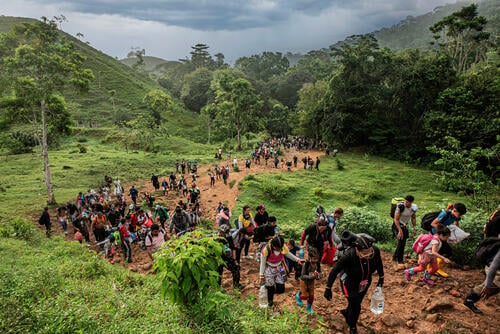
The Central American migration route, from Panama to Mexico’s northern border with the United States, is punctuated by violence.
Despite the decreasing prospects of a successful journey, due in large part to tightening migration policies, some people continue to take the risk of travelling along this route. We now also see people returning to their home country, trekking back along the route. The decreasing number of migrants travelling in the region has led to the closure of many of MSF’s projects in the region.
People who still choose to travel this route face extreme challenges along the way - extortion by criminal organisations, detention or deportation by authorities, and a lack of necessities like water, shelter, food, and medical care.
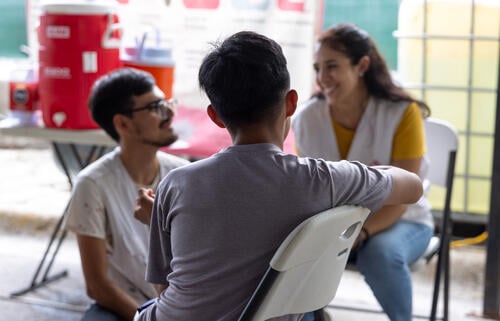
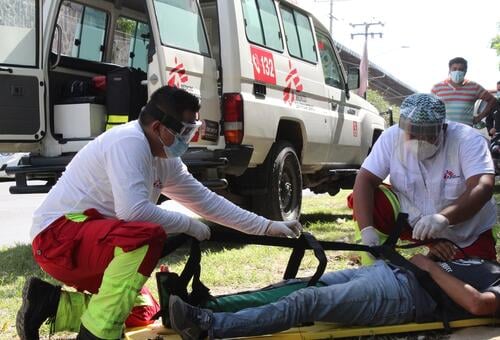
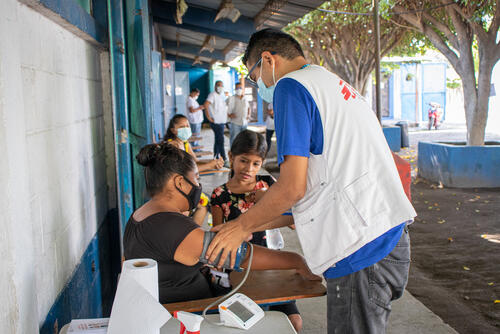
At different points along the Central American migration route, our teams have provided people with care and necessities, regardless of their nationality or legal status. While we used to work with migrants in Panama, Guatemala, Honduras, and Mexico, only our activities in Mexico remain as of October 2025. In Mexico, we are there for people who have suffered sexual violence, are under psychological distress, or in need of medications for chronic health conditions.
What to know about migration in Central America
What is making people migrate through Central America?
Many of the people we met along the Central American migration route fled their home countries because of conflict, violence, and social exclusion. Some people were also in search of a better life and economic opportunities. In February 2025, our team in Mexico met a woman from Honduras who left her home after a gang tried to recruit her husband. Stories like hers are far too common.
For many people who are now stranded around the region, returning to their home country is not an option. This could be because they lack the financial resources to do so, or they may still fear what they initially fled, such as the political crisis in Colombia and Venezuela, rife violence in Haiti, or threats from criminal groups in Ecuador.
Is everyone trying to reach the United States?
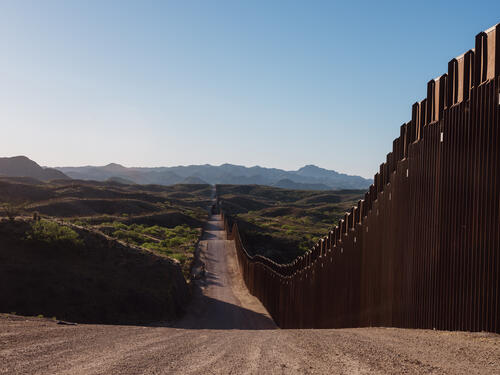
While people are still trying to reach the United States, tightening migration policies have meant that more are considering staying in Mexico. With the suspension of the United States’ process for applying for asylum at the southern border, the CBP One application, many people are now stuck in limbo in Mexico, unable to cross the border.
People fleeing conflict in the Americas are not necessarily always looking to reach the United States.
What is changing about migration in Central America?
Our teams are seeing a decrease in the number of people who are travelling the Central American migration route. This change is pronounced, and our teams are reducing our medical activities as a result. We have seen more people in need of mental health care, however, especially in Mexico, likely reflecting people’s feelings of hopelessness over new restrictive policies.
As more people are being deported or deciding to return to their home country, we are seeing them make the opposite journey along the route, moving north to south. This does not mean that south to north migration has all-together ceased. Migration patterns are constantly changing.
Is it dangerous to travel the Central America migration route?
Yes, this migration route is one of the most dangerous in the world. People risk being trafficked, robbed, raped, exploited, and tortured by organised crime groups and gangs that operate along the route. Women travelling alone or with children are more likely to suffer these dangers. In one example from many across the region, criminal groups in the Darien gap, the perilous stretch of jungle between Colombia and Panama, routinely sexually assault women, sometimes in front of their families.
We know from our work with migrants around the globe that restrictive migration policies only serve to make migration more dangerous. We fear that the new policies implemented by the US and other governments in the region will force people into more precarious situations.
What could make migrating in Central America safer?
The absence of safe avenues for migration makes migration unsafe. With the new restrictive policies put in place in early 2025, including the termination of the programme through which people can apply for asylum in the US, migrants are now left in a state of legal and humanitarian limbo. Our teams are seeing people in Mexico who are distressed and panicked about their future.
The right to seek asylum should be respected, and migrants should not be criminalised.
MSF remains committed to adapting our activities along the Central American migration route; we continue to monitor developments in the region.
MSF opened a centre dedicated to care for people who survived torture and extreme violence in 2017, in Mexico. Many people who stay at the centre for comprehensive treatment are migrants and asylum seekers. At the Comprehensive Care Centre, or El CAI in Spanish, we offer services for the mind and body. Our team sees people who have lost their connection to reality because of the violence they have faced, and people who need surgical and rehabilitative care to regain their independence after their injuries.
Every year, an estimated 400,000 people flee violence and poverty in El Salvador, Honduras and Guatemala and enter Mexico with the hope of reaching the United States. In Mexico, they are systematically exposed to further episodes of violence.
MSF has worked in El Salvador to provide healthcare to communities affected by growing violence and insecurity and to respond to outbreaks such as COVID-19.
Honduras has experienced years of political, economic and social instability, and has one of the highest rates of violence in the world. This has great medical, psychological and social consequences for people.