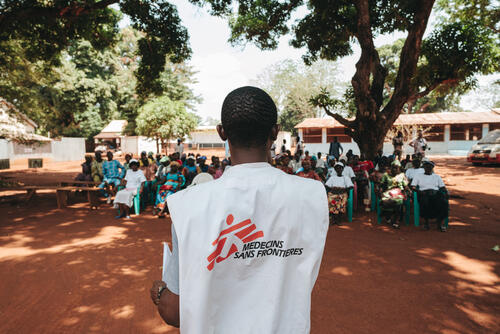



Local communities remain the primary victims of insecurity and violence in Burkina Faso.
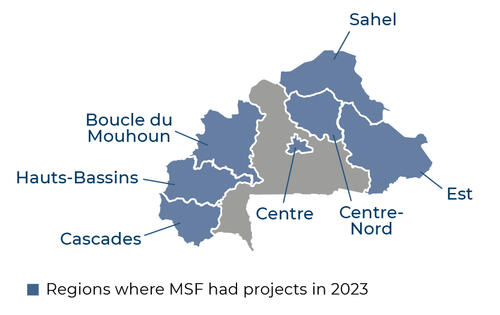
Living in a country plagued by armed groups, droughts, and political instability, many people in Burkina Faso struggle to access essential healthcare services and necessities. More than 2 million people are estimated to be internally displaced by violence, and in the Sahel, Est, and Boucle du Mouhoun regions of the country, entire towns are living under blockade by non-state armed groups.
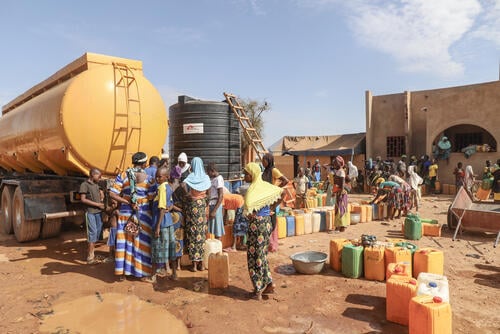
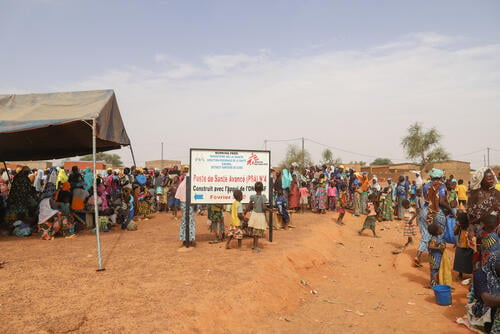
We provide a range of services, all free of cost, for displaced and host communities in Burkina Faso across seven regions of the country. These include clean water distribution, sexual and reproductive healthcare, malaria treatment, and care for children with malnutrition. Our teams also respond to disease outbreaks, like 2023’s dengue fever outbreak in Hauts-Bassins region.
Humanitarian and medical activities are not spared from violence in the country. In 2023, two of our colleagues were killed while travelling in an MSF-marked vehicle in Tougan. Ongoing insecurity, and even targeted violence at health facilities, reduces people’s access to the services they desperately need. We are committed to providing assistance to people across Burkina Faso, but at times have had to suspend our activities to prioritise the safety of our staff.
Our activities in 2023 in Burkina Faso
Data and information from the International Activity Report 2023.
1,173
1,173
€31 M
31M
1995
1995
MSF in Burkina Faso in 2023
Insecurity continued to affect Médecins Sans Frontières (MSF) activities in Burkina Faso in 2023. Our facilities were repeatedly targeted, and in February two staff members were tragically killed in a brutal attack.

109.59M
109.59M
1,020,100
1,020,1
374,300
374,3
42,300
42,3
Burkina Faso
MSF temporarily suspends activities in Djibo, Burkina Faso due to escalating insecurity
Press Release
21 Oct 2024

Burkina Faso
MSF marks one year since the killing of two colleagues in Tougan
Project Update
9 Feb 2024
Burkina Faso
Malnutrition crisis grips children trapped in western Burkina Faso
Press Release
28 Nov 2023
Burkina Faso
Severe humanitarian crisis persists for people living under blockade in Djibo
Project Update
5 May 2023
Burkina Faso
MSF condemns the brutal and deliberate killing of two staff in Burkina Faso
Press Release
9 Feb 2023
Burkina Faso
Violence and severe supply shortages leave people across Burkina Faso in dire need
Interview
17 Oct 2022
Burkina Faso
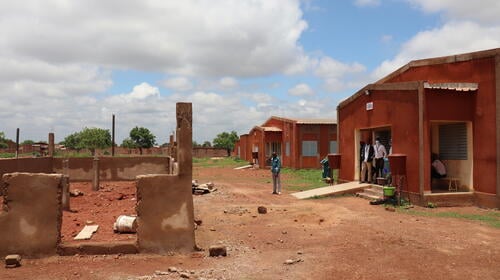
Thousands displaced after escalating violence in Boucle du Mouhoun region
Project Update
26 Aug 2022
Burkina Faso
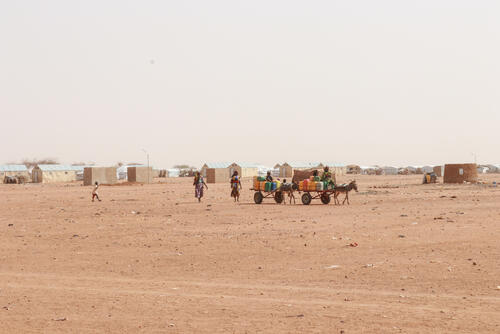
Enormous needs for hundreds of thousands of people displaced by ongoing conflict and insecurity
Project Update
27 Jun 2022
Burkina Faso
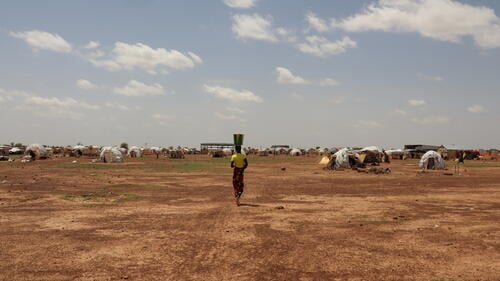
Four things to know about the crisis in Burkina Faso
Project Update
28 Jan 2022