


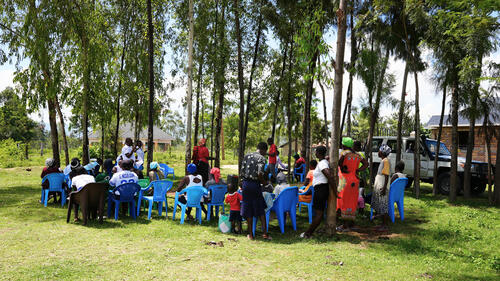
We offer care to refugees, survivors of sexual violence and people who use drugs in Kenya, and respond to public health challenges, including HIV.
For over 30 years, our teams have been providing care to communities in and around the Dadaab refugee camp. In our 100-bed hospital in Dagahaley, part of the Dadaab refugee camp, our teams conduct outpatient consultations, and admit patients to the hospital, including children with severe malnutrition.
In Kiambu, our clinic offers care for people who use drugs – who are often excluded from healthcare services. The Methadone Assisted Therapy (MAT) clinic aims to reduce the morbidity and mortality of people addicted to heroin. It caters for all healthcare needs including mental health and psychosocial support.
Our activities in 2025 in Kenya
Data and information from the International Activity Report 2025.
742
742
27.9 M€
27.9M
1987
1987
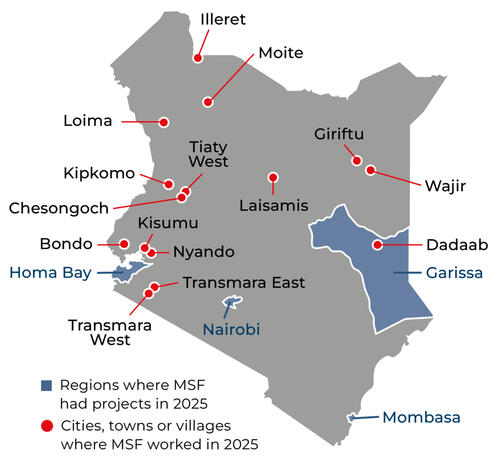
MSF in Kenya in 2025
Médecins Sans Frontières responded to multiple emergencies in Kenya, including disease outbreaks, devastating landslides, and violent unrest. We also continued our regular projects, delivering lifesaving care to refugees and remote communities.

325,800
325,8
26,400
26,4
19,100
19,1
3,560
3,56
Filter Tips
- Try a different country, year, format, or topic.
- Clear one or more filters
Contact us
MSF East Africa
3rd Floor, Pitman House
Jakaya Kikwete Road
Nairobi
Kenya