Read the policies, reports, and plans on how we address issues like racism and reduce our carbon footprint, ensuring our actions align with the highest ethical standards.
In more than 70 countries, Médecins Sans Frontières provides medical humanitarian assistance to save lives and ease the suffering of people in crisis situations.
MSF Access pushes for access to, and the development of, life-saving and life-prolonging medicines, diagnostic tests and vaccines for people in our programmes and beyond.
Based in Paris, CRASH conducts and directs studies and analysis of MSF actions. They participate in internal training sessions and assessment missions in the field.
Based in Geneva, UREPH (or Research Unit) aims to improve the way MSF projects are implemented in the field and to participate in critical thinking on humanitarian and medical action.
Based in Brussels, MSF Analysis intends to stimulate reflection and debate on humanitarian topics organised around the themes of migration, refugees, aid access, health policy and the environment in which aid operates.
This logistical and supply centre in Brussels provides storage of and delivers medical equipment, logistics and drugs for international purchases for MSF missions.
This supply and logistics centre in Bordeaux, France, provides warehousing and delivery of medical equipment, logistics and drugs for international purchases for MSF missions.
This logistical centre in Amsterdam purchases, tests, and stores equipment including vehicles, communications material, power supplies, water-processing facilities and nutritional supplements.
BRAMU specialises in neglected tropical diseases, such as dengue and Chagas, and other infectious diseases. This medical unit is based in Rio de Janeiro, Brazil.
Our medical guidelines are based on scientific data collected from MSF’s experiences, the World Health Organization (WHO), other renowned international medical institutions, and medical and scientific journals.
Providing epidemiological expertise to underpin our operations, conducting research and training to support our goal of providing medical aid in areas where people are affected by conflict, epidemics, disasters, or excluded from health care.
Evaluation Units have been established in Vienna, Stockholm, and Paris, assessing the potential and limitations of medical humanitarian action, thereby enhancing the effectiveness of our medical humanitarian work.
MSF works with LGBTQI+ populations in many settings over the last 25-30 years. LGBTQI+ people face healthcare disparities with limited access to care and higher disease rates than the general population.
The Luxembourg Operational Research (LuxOR) unit coordinates field research projects and operational research training, and provides support for documentation activities and routine data collection.
The MSF Paediatric Days is an event for paediatric field staff, policy makers and academia to exchange ideas, align efforts, inspire and share frontline research to advance urgent paediatric issues of direct concern for the humanitarian field.
The MSF Foundation aims to create a fertile arena for logistics and medical knowledge-sharing to meet the needs of MSF and the humanitarian sector as a whole.
A collaborative, patients’ needs-driven, non-profit drug research and development organisation that is developing new treatments for neglected diseases, founded in 2003 by seven organisations from around the world.
Noma is a preventable and treatable neglected disease, but 90 per cent of people will die within the first two weeks of infection if they do not receive treatment.
The GeoMSF platform is a dynamic one-stop-shop website for all of MSF's GIS related services and products. Access maps and applications through the catalogue, request geographical support, or produce a map on GeoMSF.
MSF's Pictures of the Year collection looks back on a year of providing medical care in extreme conditions and contexts across the globe. Through the lens of photojournalists and our staff photographers, MSF remembers and pays tribute to those who have struggled, those who have persevered and those who have perished.
From war and civil strife, to disease and epidemics, to natural disasters, MSF staff have been on the frontline of saving lives during 2017. Our talented and dedicated photographers have been there every step of the way to bear witness to the stories of the past year, capturing the work of our teams and the ongoing battle to save those in peril in our world.
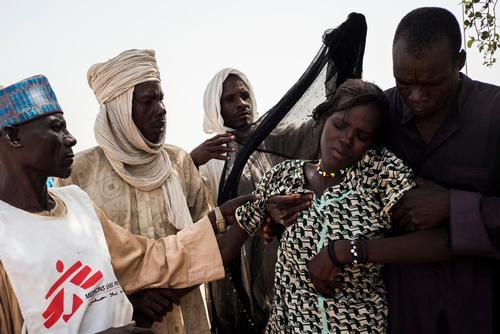
November 2016 – A young woman, from a camp for internally displaced people in Yakoua town, is carried after travelling more than 30km on a horse and cart to reach the MSF mobile clinic near Bol, Chad.
Dominic Nahr/MAPS
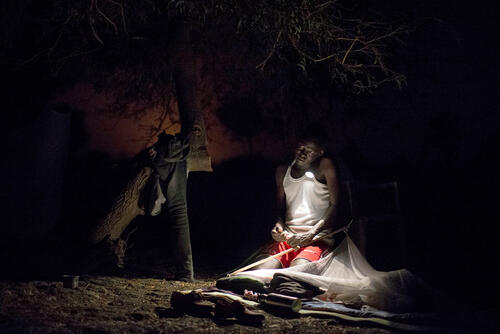
March 2017 – James, a Community Area Supervisor with MSF, organises his bedding for the night close to an MSF outdoor support clinic in Gier, Leer County, South Sudan.
Siegfried Modola
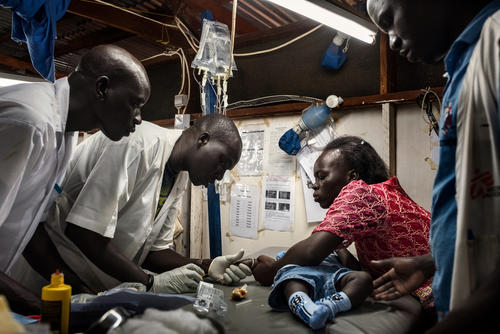
August 2017 – Doctors examine seven-month-old Bless, at the MSF hospital in Aweil, South Sudan. Bakhita (R), who is an MSF midwife in the same hospital, brought her son in suspecting he has malaria.
Peter Bauza
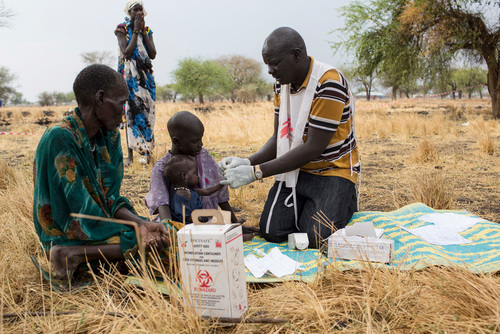
March 2017 – Community Health Promoter, Gatbel, tests a child for malaria at an outdoor support clinic in Thaker, Leer County, South Sudan.
Siegfried Modola
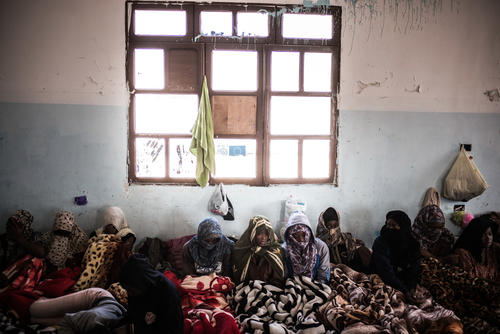
March 2017 – Crowded together with little more than a blanket and the clothes they wear, women detainees are held at the Sorman detention centre, some 60km west of Tripoli, Libya. Detained by Libyan authorities for travelling through the country in the attempt to reach the coast and board a smuggler's boat to Europe, the women face weeks, if not months, of uncertainty whilst held in horrific conditions.
Guillaume Binet/Myop
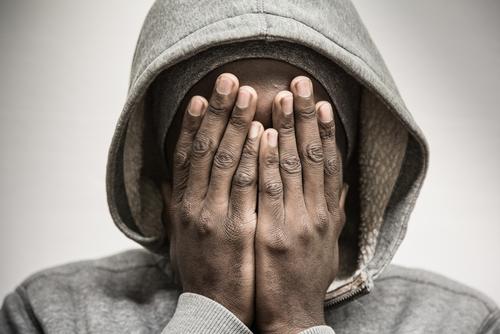
Since his arrival in Cagliari, 'M' began his long journey through Europe, taking him from Sardinia to Milan, passing through Ventimiglia and Como. He witnessed the death of his friend and travelling companion who lost his life in a tragic accident while the two men attempted to cross into France. M was sent back, first from France and then Switzerland. He now waits, stuck on the Italian side of the border, in Como.
Giuseppe La Rosa/MSF
Sally, 29, from Nasiriyah in Iraq, fled beatings and violence in Iraq after divorcing her husband. She reached Greece by boat from Turkey, alongside other refugees, and now lives in Athens where she is learning Greek and receiving counselling from MSF.
Tanya Habjouqa/NOOR
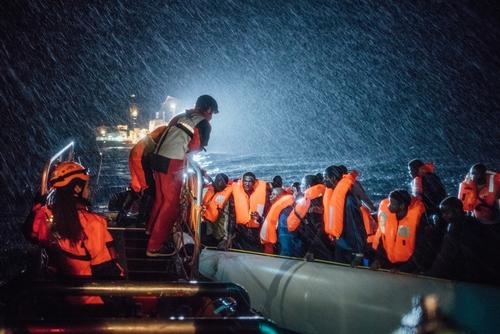
MSF and SOS Mediterannée search and rescue teams perform a rescue mission after sighting a boat in distress off the northern coast of Libya. Central Mediterranean, 2016.
Kevin McElvaney
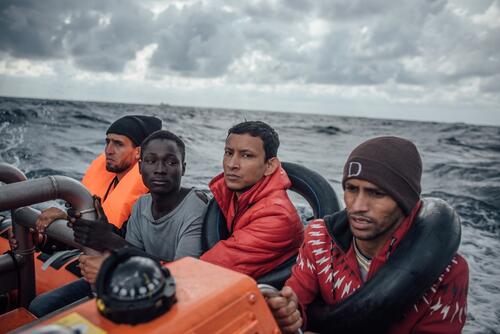
December 2016 – Young men hold on tight as a speedboat transfers them from their wooden boat to the MSF/SOS search and rescue vessel, Aquarius, in the rough seas of the Mediterranean, off the northern coast of Libya.
Kevin McElvaney
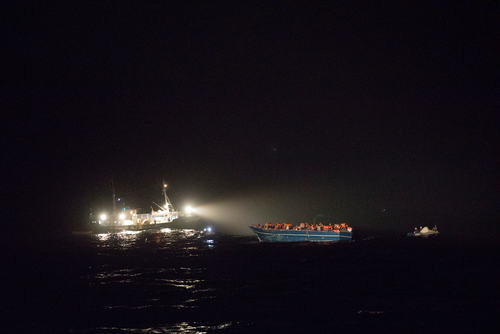
March 2017 – A wooden boat with 412 people on board, mainly from Asian countries such as Pakistan, Bangladesh and Nepal, is rescued at night by the MSF search and rescue ship, Vos Prudence and other vessels, in the Mediterranean Sea.
Albert Masias/MSF
June 2017 – Omayma, 21, from Morocco, photographed in international waters, mid-way between Libya and Italy, in the Mediterranean Sea. From the series 'The Crossing'.
Andrew McConnell/Panos Pictures
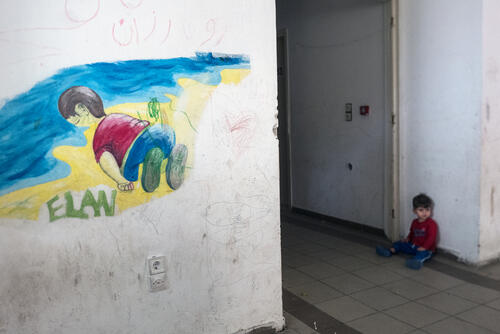
June 2017 – A young boy sits in a corridor of an abandoned spa resort in Thermopylae, Greece. The resort buildings are being used to house refugees where MSF is providing mental health care to those that find themselves trapped there by EU refugee policy preventing them from continuing their journey through Europe.
Tanya Habjouqa/NOOR
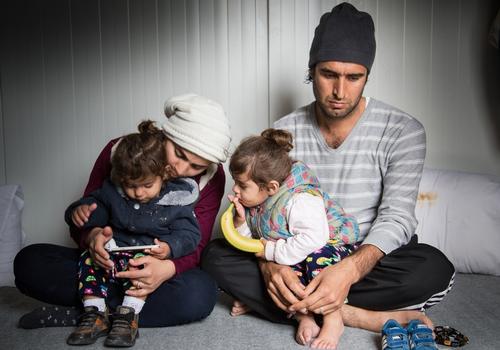
March 2017 – Karon, 31, sits with his wife and their twin girls in a refugee shelter on the Greek island of Lesvos. The family arrived in August 2016 but have since been blocked by Greek authorities from leaving the island to continue their journey to the mainland.
“What I have seen in Iraq, I do not want my children to see it again. This is why we left our country, where everything is paralyzed, everything stopped, there is no life… My true dream is that my children will live in a beautiful country, without war, without bloodshed, without any of this. This is the only thing I wish for.”
Giuseppe La Rosa/MSF
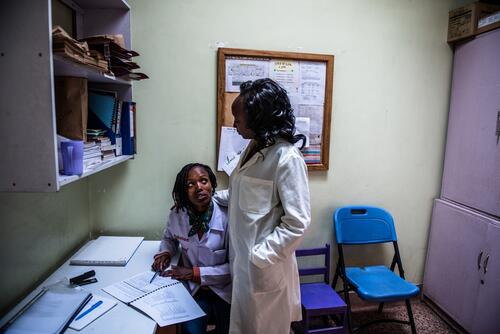
August 2017 – Staff at the MSF clinic in Eastlands, Nairobi, provide care for survivors of sexual and gender-based violence. The 24-hour clinic sees more than 200 patients monthly due to MSF expanding its catchment area with an ambulance service, a call centre, and through a community awareness and mobilization project.
Fredrik Lerneryd
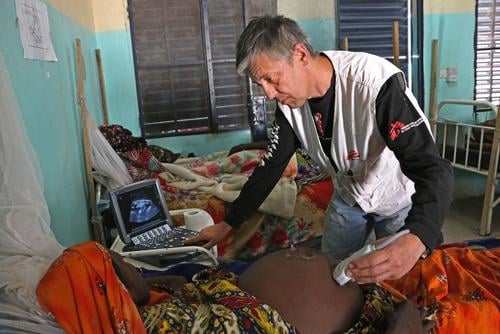
February 2017 – Dr Henryk Mazurek, MSF gynaecologist-obstetrician at the Bol regional hospital, conducts an ultrasound on a patient who is about to deliver twins, prior to obstetric surgery.
Sara Creta/MSF
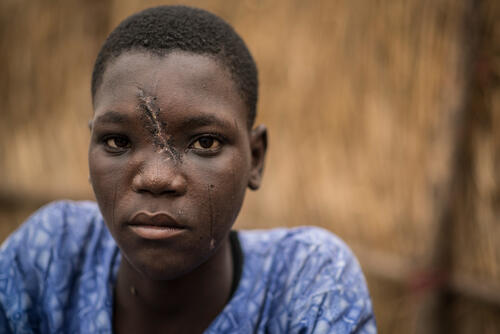
Toudjani Boulama, 18, was treated by MSF for the wound he received to his face after he was shot by a member of Boko Haram in Cameroon. Toudjani and some 45,000 other refugees currently live in a camp for internally displaced people in Ngala, Borno state, Nigeria. Many people have fled there from neighbouring Cameroon due to the ongoing violence from Boko Haram and military operations in the area.
Sylvain Cherkaoui/COSMOS
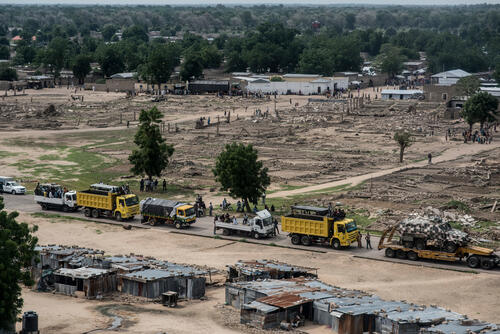
July 2017 – A security convoy prepares to leave the internally displaced persons camp in Banki, in the northeast of Nigeria. The camp was established by the Nigerian authorities after the town was retaken from Boko Haram in September 2015. Due to Boko Haram groups remaining in the area, it is not safe for refugees to leave. MSF provides medical care, sanitation, food distribution and a mobile medical team provides preventive malaria treatment for children during the rainy season.
Sylvain Cherkaoui/COSMOS
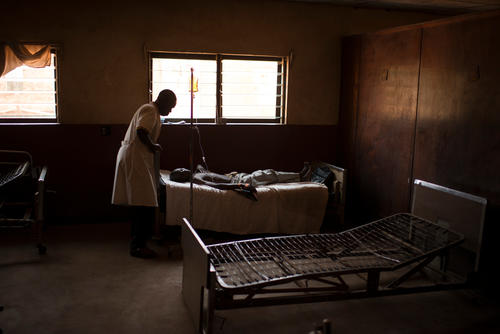
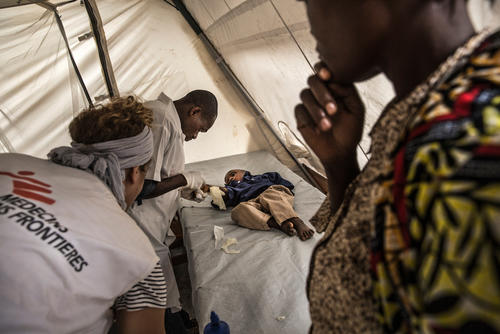
April 2017 – Zahardien Musa, a 14-year-old meningitis patient from Sokoto, rests on his bed with his father at the Muhammed Murtala Specialist Hospital, Nigeria.
Fabrice Caterini/INEDIZ
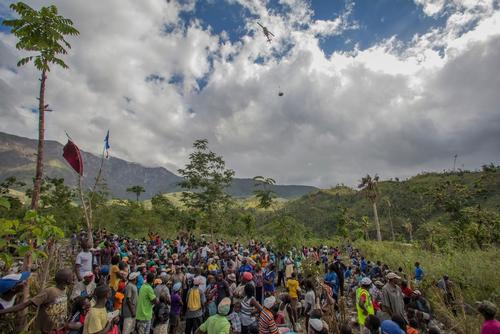
January 2017 – Residents of Bolosse, in the Haitian mountains, watch the arrival by helicopter of an MSF relief packagae of medical aid and building materials. MSF is conducting relief distributions in some of the most remote areas of the country following the devastation by Hurricane Matthew.
Jeanty Junior Augustin
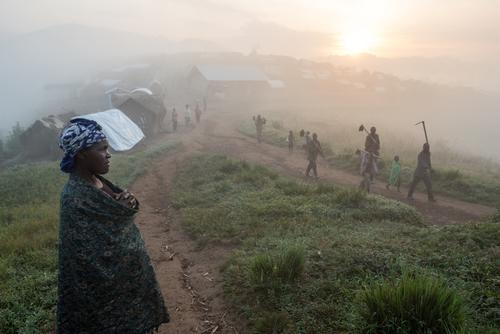
February 2017 – Dawn breaks over the camp for internally displaced people in Mweso, North Kivu state, in eastern Democratic Republic of Congo. The camp, established in 2007, is located about 120 kilometres from North Kivu’s capital Goma.
Gwenn Dubourthoumieu
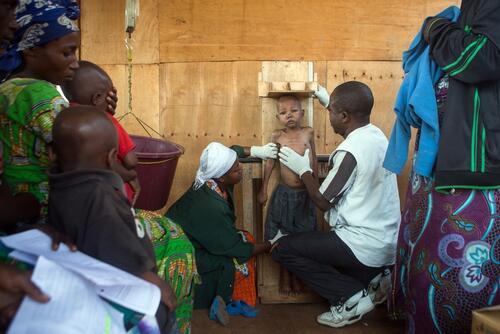
February 2017 – A severely malnourished child stands as MSF staff measure his height at an MSF-supported health centre in Bukama, Masisi, Democratic Republic of Congo.
Gwenn Dubourthoumieu
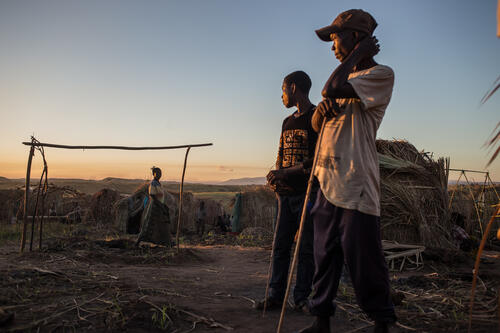
May 2017 – Men displaced by intercommunal fighting in the province of Tanganyika build a shelter in the Mukuku camp in Kalemie, Democratic Republic of Congo. Some 433,700 people have been displaced since July 2016. Many live in informal settlements and camps with limited access to healthcare, and face alarming shortages of food, water and shelter.
Lena Mucha
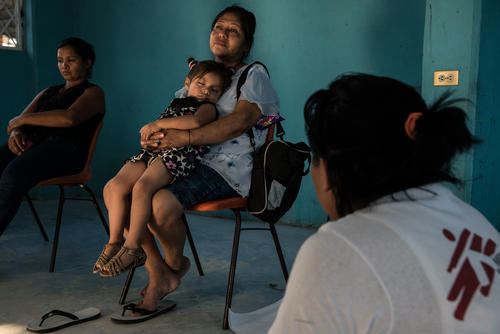
March 2017 – A woman rests with her granddaughter during an MSF support session for women in a shelter for migrants in Tenosique, Mexico. According to an MSF survey, nearly one-third of women migrating through Mexico suffer sexual abuse.
Marta Soszynska/MSF
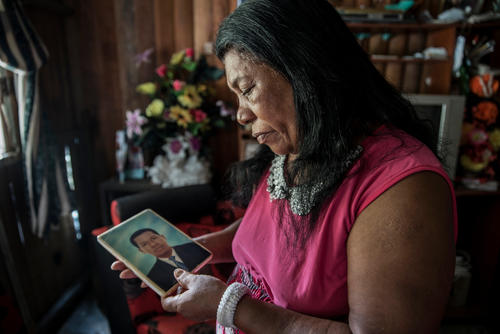
December 2016 – Francisca, 77, looks at a picture of her son who died six years ago in the Brisas del Mar district of Buenaventura, Colombia. She has been living in the neighbourhood for 32 years. Buenaventura is situated on the Colombian Pacific coast. It has gained notoriety as a city with the highest crime rates in the country, where a large part of the population is exposed daily to acts of violence, including killings, shootings, extortion, kidnappings and sexual abuse.
Marta Soszynska/MSF
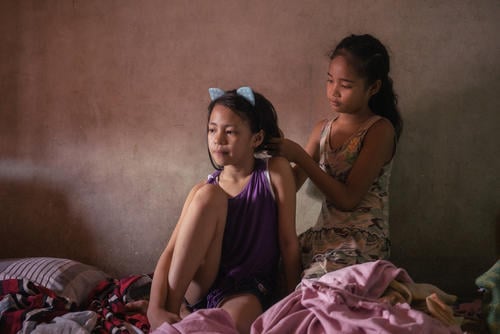
September 2017 – Elyes (L) and Diana fix each other's hair before posing for a portrait in their tenement home near Smokey Mountain, Manila. Both girls have received vaccinations from the Likhaan clinic, which provides free healthcare for low income communities. For many members of low income communities in Manila, procuring basics such as food, shelter, and clothing takes priority over their healthcare needs.
Hannah Reyes Morales
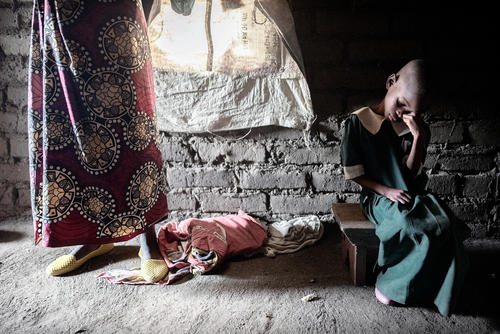
July 2017 – Eleven-year-old Gloria Chipasula sits wearing her school dress as her mother, Teleza James, stands next to her in their home in Nsanje, Malawi. Gloria is both HIV and TB positive.
Luca Sola
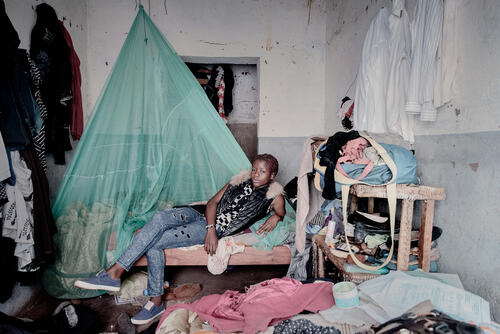
July 2017 – Debora Njala, 18, lies on her bed in Chiradzulu. Deborah contracted HIV from her mother during pregnancy. Despite also testing positive for tuberculosis she is adamant: "With proper medication I will achieve my dreams and the future is bright."
Luca Sola
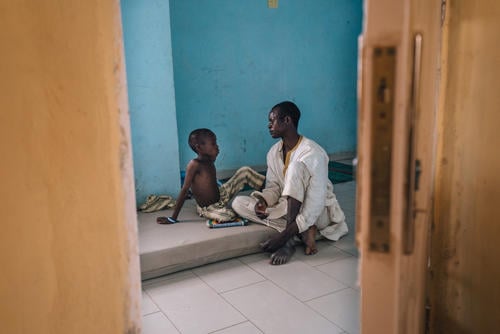
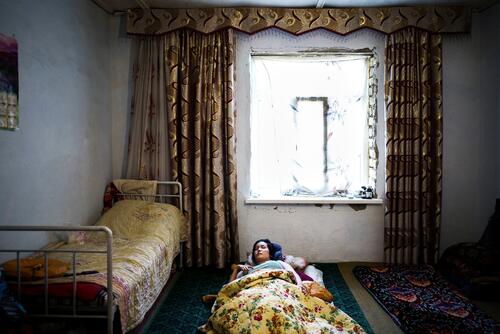
Gulzat, 17, receives a visit from the MSF medical team at home. Gulzat suffered tuberculosis meningitis two years ago and despite medical treatment she did not fully recover. She is paralyzed and entirely dependent on her relatives for day to day care. MSF supports Gulzat as a palliative care patient, helping to provide drugs and finance a variety of her medical costs.
Maxime Fossat
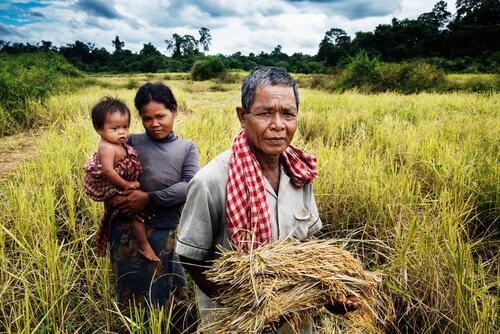
January 2017 – Saom Koem (R) lives with his wife, daughter, son-in-law and grandson in Pni Ro Luk, during the planting and harvest seasons. Two years ago Saom Koem contracted malaria but was treated. This year his whole family took part in the project for proactive voluntary screening for malaria.
Tim Dirven/Panos Pictures
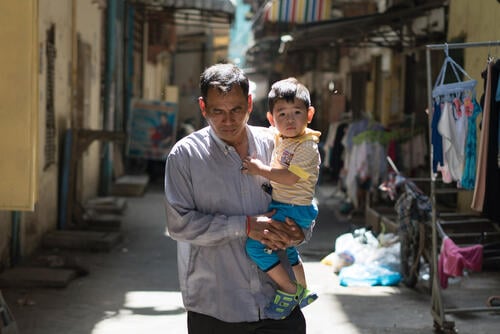
April 2017 – Din Savorn, a 50-year-old former policeman from Phnom Penh, was overwhelmed with relief when he found he was finally cured of hepatitis C. After living with the disease for nearly 20 years, Din was one of the first people to be treated with a new and more effective treatment for hepatitis C, offered for free by the MSF clinic in Phnom Penh.
Todd Brown
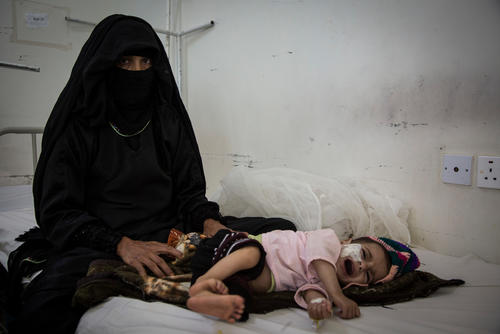
Besam brings her seven-month-old son to the health center for a check up after he exhibited a high fever and was vomiting. The child is malnourished but according to the doctor, such cases happen very often. "Mothers stop breastfeeding and replace their milk with a powdered one, but the water isn’t clean and the children get very sick."
Florian SERIEX/MSF
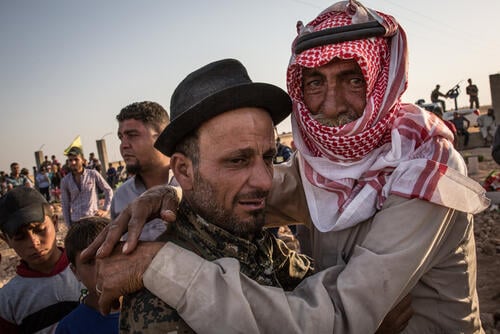
July 2017 - Two men embrace each other, tears in their eyes, during a funeral in Tal Abyad for local men who had fought and been killed in the fight for Raqqa.
Chris Huby
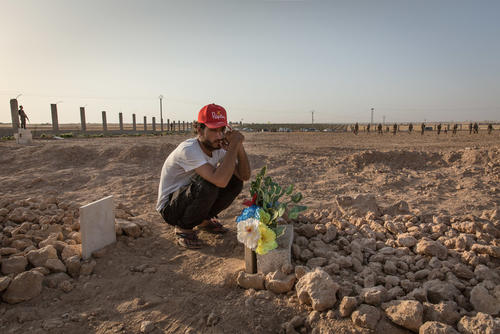
July 2017 – Ismael sits at the graveside of his friend, Hout, who was killed two days earlier by an Islamic State group sniper in the battle for Raqqa. A camp located in Ain Issa, 55 km north of Raqqa, shelters around 8,000 people who have been displaced by the war. MSF teams manage the water supply, and are providing primary health care and stabilizing wounded patients before referring the most severe cases to Kobane hospital.
Chris Huby
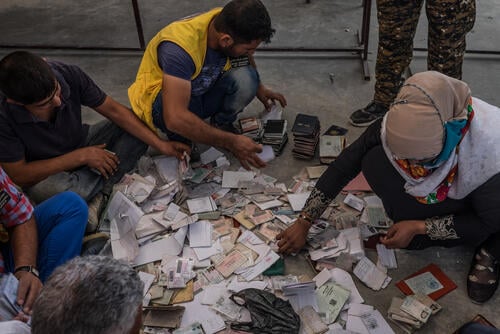
September 2017 – Members of the civil council of Raqqa organise identity cards and passports handed in by those newly arrived at the Ain Issa camp for displaced people in northern Syria. Civilian areas in and around Raqqa have been routinely bombed and deprived of assistance. Access to food and healthcare remains extremely poor, especially in areas undergoing prolonged siege.
Agnes Varraine-Leca
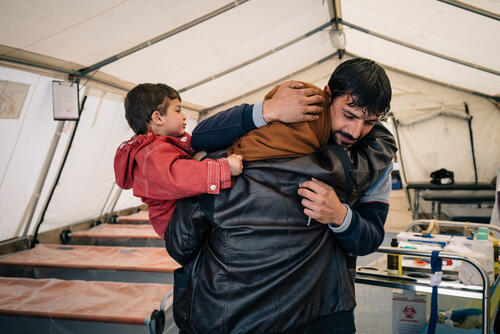
A brother and sister are united at the MSF field trauma centre, south of Mosul in Iraq. The siblings have not seen each other for over two years due to the conflict, and met again by chance in this field hospital after the woman’s daughter was brought in to be treated for minor injuries.
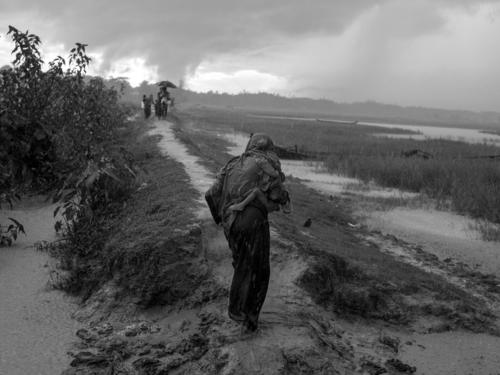
October 2017 – Rohingya refugees from Myanmar, awaiting permission from Bangladeshi border guards to continue their journey to the refugee camps near Cox's Bazar, seek shelter from the monsoon rains in a rice field on the Bangladeshi side of the border with Myanmar.
Moises Saman/Magnum Photos for MSF
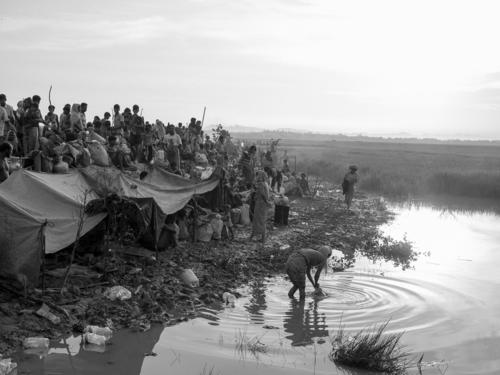
October 2017 – Rohingya refugees from Myanmar gather on the Bangladeshi side of the Naf River waiting for permission to continue their journey to the refugee camps near Cox's Bazar.
Moises Saman/Magnum Photos for MSF
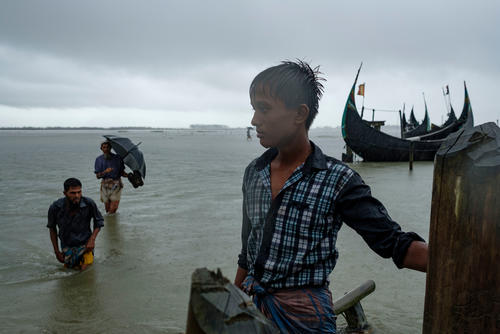
September 2017 – A local Bangladeshi boy watches the Rohingya refugees arriving under torrential rain at a border crossing on the Naf river, near Teknaf, after fleeing Myanmar. More than 600,000 Rohingya have fled to Bangladesh from Rakhine State in Myanmar following an escalation in violence in August.
Antonio Faccilongo
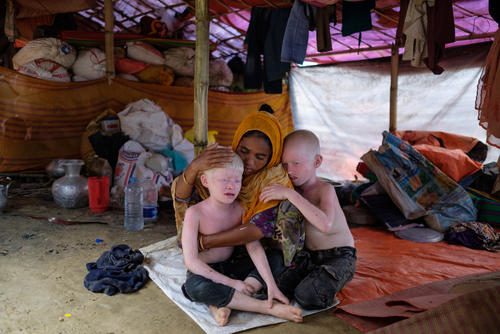
September 2017 – A Rohingya woman comforts her two sons in their tent in the Kutupalong camp in Cox's Bazar, Bangladesh. The family recently fled Myanmar joining hundreds of thousands of Rohingya who have fled across the border during episodes of violence in previous years, moving into makeshift settlements without adequate access to shelter, food, clean water, or proper sanitation.
Antonio Faccilongo
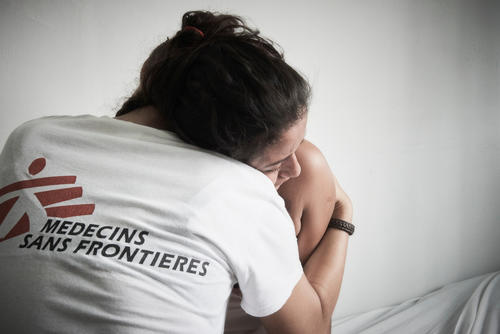
Cinthya, 18, receives a hug from an MSF nurse at the Choloma clinic for medical and mental healthcare in Honduras, June 2017. She has suffered domestic violence and is two months' pregnant.
Christina Simons/MSF



![Um Ahmad (Sally Saad, 29)
Received MSF mental health counseling
(Today, Sally is living with a female refugee from West Africa and exploring her body as canvas of expression. Her body is her own for first time in years. Her favorite new tattoo? I suffered I learned I changed. She is learning Greek and receiving counseling from MSF)
Divorce was not easy….my husband was from Basra, and I am from Nasiriyah.
Iraq has a tribal way of living. Everybody gets involved like the uncles and the father. Despite being beaten violently, they all intervened, and I was coerced to return home.
They took me back under the pretext that it was for the children. It was inevitable for the families to intervene because they don’t want to develop a reputation due to divorce and the children.
This cycle continued for years. It was worse when my husband joined the army. He broke my jaw, when my daughter Rula was a year and a half old.
She doesn’t remember any of it, but my older son does. He was three years old.
He was beginning to understand what was going on.
After joining army, only thing that changed was that his dominance had become undisputed.
He had acquired authority and power. Guns! Can you believe that? He hit me with guns twice. Another time he pulled a gun on me. Once he assaulted me here… [She indicates a delicate part of her body]
In 2014, I had had enough.
I stayed with my family for about eight months. The kids stayed with me. In the beginning, he took them claiming that it would only be a visit. He told my father that he wanted to see the children and asked for them to be sent over.
I had a feeling it would be the last time. And indeed, he took them and kept them.
Afterwards, he informed that we were getting divorced. It came from him not from me because if I asked for it, society would have looked at me as if the fault were mine.
I waited for him to say it.
He wanted to get divorced but his condition was to have the children.
I refused, of course. He sent back agreeing to me keeping custody and things carried on.
I went to court. It was the first time we had seen each other after eight months; it happened at the courthouse. I was shocked to see that all the papers he had prepared entailed that he would have custody of the children, not me. He prepared papers to have custody of the children for himself.
Another thing is that he agreed with my older brother to have me give up everything. Everything.
Due to the condition I was in, I didn’t care. Honestly, I didn’t care about the gold or the money or anything. That was it. It meant to give up everything to be free from him.
The judge asked me if I was being threatened, because no woman would stand up and give everything up like that. We got divorced. I told him that I didn’t want any problems.
He threatened my mother, telling her that we did not want to see his “other face”.
Naturally, my mom felt scared for my siblings. I had fights with my mother throughout the whole winter.
We got divorced but I did not see any of children afterwards. Not once. Not even a phone call or a message. My life changed too; everybody looked at me differently. My family did too.
My oldest brother was the first to antagonize me. My mother did too.
My mother was scared and wanted me to forget what happened and go back to him, but… my children.I tried to get them back. I tried to rent a house. He would be legally obliged to pay their alimony. The law stipulates that he pays alimony while I rent a small house.
He had documents claiming that I had given up custody.
He claimed that by separating I agreed to give up custody.
I moved out of my family’s house at the time due to all the problems and the pressure that was mounting on me. I moved in with my aunt; my mother’s sister.
I tried to do something... I tried to get them back. I tried to see them.
I was surprised to see one of cars from my husband's family one day through the cameras at my family’s house. They were dressed in their tribe’s clothing.
They spoke with my mother and told her that I must forget about the children.
They said that as a tribe they are capable of doing anything. No government or country can intervene or do anything to stop them. It suddenly became a conflict between two tribes.
After that, my older brother said if that I didn’t go back to my husband, he’d kill me.
At the time, I felt like going back was not a way to live.
I tried to take the children and leave the country. I was able to get my passport out of the house.
My son snuck it out for me. I talked to him and said: “Hamodeh, I need something. Can you do it for me?”
I told him where the passport was and asked him to leave it at my neighbor’s. He just had to hide it for me there. I tried to get the children out of the house more than once, but I was surprised to know that he found out that my passport had been taken out of the house.
He figured I could leave the country, so he said if anything happened to the children or if any of them had been taken or if I had to come see them, he would take one of my brothers in return.
If you bring the children back, I’ll let your brother go. But if you don’t then it’s over.
I was conflicted; I had to choose between my children and my siblings.
I thought about leaving to escape the problems caused by my brother and ex-husband, so I wouldn’t go back. I went to Turkey. My best friend since seventh grade lives in Jordan and helped me.
She booked me a flight ticket from Jordan. She sent it to me via cellphone.
She got me out of my aunt’s house after they found out I was staying there. I went to her mother’s house.
I tried one thing… two days before I left, I went to the school.
I told them because I didn’t want them to think their mother had abandoned them, or that she just left.
He told me their father had told them that I didn’t want them. And that I gave them up.
I told them there was no truth to that.
I told them there is one thing I want to do, but I will only go forward with it if you accept, if not then I will stay. I told them I wanted to leave the country and I promised to take them with me.
That I would take them once I feel like I am capable of protecting them.
My daughter immediately said: “Mom, go and leave all of this behind.” She said that right away.
I was startled that my daughter was telling me to leave.
Hamodeh asked me to promise him to that I would take them, then said that once I was going to do it, he’d go to the courthouse and tell them he wants to live with his mother. I went to see Noor at the kindergarten. He was really upset and told me that his father was going to get married. It’s true; he got married one week after we divorced.
One week. He married right away. He gave her my house, my room, my stuff. All the same.
It was like a movie; I went to the house of my friend’s mother. I was scared and afraid someone would see me; it was the first time I had taken such a step.I was really scared when I went to the airport. I had turned my phone off. I passed through Baghdad airport as if I had passed through hell.
When I got to Turkey… my Jordanian friend sent her friend to meet at the airport right away.
She told him: “Keep Sally by your side,” because it was a new place and I knew nothing about it.
I was supposed to stay with him until she would arrive.
She booked a ticket and came to see me in Turkey. I haven’t heard my kids voices in six months.
I did see Rula once though, on the camera.
She recognized me so she told her father. He overheard them talking to each other so he figured out that I had phoned them. He hit Hamodeh and Rula when he found out. The neighbors told me.
Hamodeh is the bravest one of them; he isn’t scared. He would contact me from his friend’s house or facebook or send me messages. He tells me that he hasn’t forgotten about me but he is scared of his father. However, I haven’t heard a word from them since January. I know their news; the neighbor always visits and tells me afterwards.
When I arrived to Turkey, my friend told me that the only thing I would be able to get back is my children and that I would be able to live and relax. She encouraged me to cross the sea. She told me to leave.
I feel like I’m the victim of a society that rejects the idea of a woman getting divorced and then moving on with her life.
I left my children behind because my friend and my aunt got me to believe that I would be able to get them back once I got to Europe. I was shocked to discover that this were not the case.
It can only happen with his consent. Leaving Iraq requires the parents’ consent or after they turn 18 and make the choice themselves.
Another thing is that if I stayed in Greece, it would be difficult to bring them here. You can see how we live here, how will the children live?
If I got a job or built a life, even here in Greece, I would be able to care for them. I would not hesitate for a moment.
I got to university but never finished because I got married.
I took a deep breath of relief after getting the ID for “residency” in Athens. I felt like I had accomplished something.Despite the situation in Greece, I accomplished something.
I signed up at that university course today—to learn Greek and work to a new life.
They [the children] are fine, but they always ask about my whereabouts and want to talk to me. They are living through the same hardships I did.
I look at pictures or videos of them. I cry constantly. Sometimes I contact the neighbors just to hear their voices. Only then do I calm down. Sometimes I have this fear that they have forgotten about me.
I talked to him about two months ago; to the father. I asked him to just let me hear their voices and talk to them because I’m far away so it wouldn’t make any difference. I told him that I wanted to check on him and hear their voices, but they are scared of him. Every phone call ends abruptly after 2 minutes; Hamodeh would just say “dad is coming” and he’d hang up.
He had the same vileness, behavior and way of thinking. Blasphemy, explicit language. Just forget about it. Forget about it.
Every time I talk to Hamodeh, they ask me when I’m going to get married. I tell him this: “Habibi, I only have one person I love that I hope I get to be with. He is growing up and will be as tall as me soon. I hope he will be as tall as me or even taller when he gets to me. I will hug him, walk among the people and let them all know that he is the one I love. Don’t ever think that one day I would leave you or marry. It is never going to happen.”
I want him to keep that in mind because I truly wouldn’t do it. It would be difficult, especially for them.
I will never forget what the Turkish did. The boat carried around 300 people, all of which were children. The Turkish police kept filling up water until it reached here.
I didn’t care because I was exhausted. It didn’t matter whether we died or got to our destination. Greek police were just watching, doing nothing to help. The big boat which carried the Greek flag just watched through binoculars.
This was on the day of the agreement. I had the luck to take to the sea on this very day.
Two boys jumped into the water so the Turkish police were trying to get them on board of their ship. They did this for us, collectively, giving us a chance to get away as they focused on boys. We then arrived to the island. One of them did it so his brother would make it. What happened with the Turkish police was utterly unforgettable.The boat was full of water and the screams and crying of children.
I was taking pictures with my phone. One of the Turkish policemen saw me and gave me daunting looks. He started pointing at my phone and doing this with his hand. [Indicating he would “show me” when he got his hands on me]
He said: “Take all the photos you want; the phone will be confiscated anyway.”
When we came to the island, we informed [the Greek police]. They did nothing.
We arrived on Chios Island.
My third son is Noor. 2007.
His name is Ahmad. My daughter’s name is Rula.
Noor Eddin. (Third child) He was born in 2010.
Rula was born in 2012. Five years old.
Hamodeh (Ahmad) is 10 years old.
Rula is nearly now nearly 8 years old.](https://img.msf.org/AssetLink/sj4q51as882w6iee1t3v72gmfep302nd.jpg "Breathing Fresh Air in Solitary Confinement")
![Omayma, Morocco, 21
I had a lot of problems with my father, as did all my siblings. There are four of us, with me in the middle. My father’s a drug addict. He didn’t give us money to go to school, so we dropped out. He had no job. Although he was healthy, he’d sleep at home all day, so my mother worked as a housekeeper to feed us. He used to beat my mum with a belt, over and over until she bled. He’d come home and beat us all with anything within reach.
One Friday, my dad was drunk and asked me to get him some money by any means I could, even if it meant prostituting myself. Again and again he pulled my hair, pushed me around and banged my head against the wall until my nose bled. The drugs had made him mad. My mother and I were under such stress that we used to faint a lot. When I told my mum we should call the police, she got angry and said we should be patient. She said if we reported him, we’d all be out on the street as the house was his.
When I told my mother I wanted to go to Europe, she was sad and tried to stop me. She asked me how I could leave her when she was sick. She said I should stay and find a job and maybe get married. But I’m too young to get married. I asked her for money for the journey and promised that I’d return it once I’d educated myself. She was worried I’d die. “What will I do if you die?” she asked me. I replied that if I died, she should forgive me.
I flew to Tunisia and took a bus from Tunis to my uncle’s house near the border. I couldn’t stay with him because he can barely feed his own children. We talked with people who could put me on a boat to Europe. The smuggler took me to a house in Sabrata [on the Libyan coast, 100 km east of the Tunisian border] with other women and young men and we stayed there for a couple of months. They beat the men, but the girls were well treated.
I paid them 20,000 Moroccan dirhams [1,800 euros] – mum borrowed the money from the family she works for. One night they came to us and told us to collect our things quickly because it was time to go. When I took the boat I saw death with my own eyes. There was 20 cm of water in the bottom of the boat. There were a lot of young kids, I couldn’t even lift my head because I was so seasick – I threw up many times.
They gave us lifejackets, but they turned out to be fake. When we found out, the young men in the boat – Moroccans and Syrians – started arguing and fighting. The women and children were terrified we’d capsize. The sea is very dangerous. I’ll never take a boat like that again.
I thank God that no one assaulted me and that I was saved. I will continue my education. I will learn a new language and find a job. I want to help my mother, because otherwise she’ll work as a housekeeper forever. My father will carry on doing nothing. I couldn’t go back to Morocco, I’d rather die.](https://img.msf.org/AssetLink/p0uceknl71nlhx5v0xm1188mt8x2a1vi.jpg "The Crossing 05")