


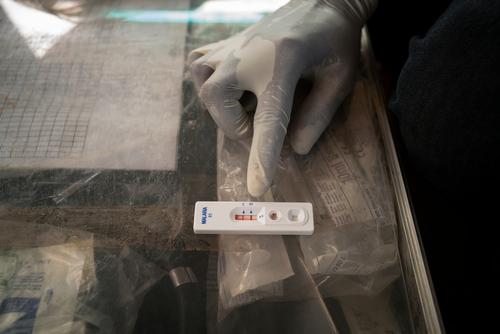
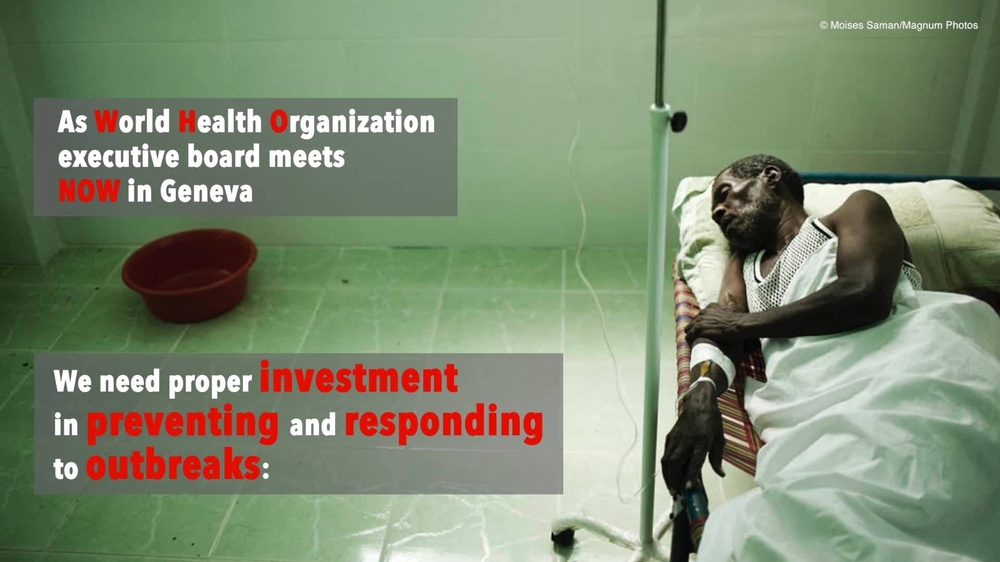
Geneva — Five diseases with the potential to become epidemics in 2016 are being highlighted by Médecins Sans Frontières (MSF), as the World Health Organization’s executive board meets in Geneva. Without proper investment in preventing and responding to outbreaks of cholera, malaria, measles, meningitis and a group of often-overlooked diseases spread by viruses and parasites, they are likely to pose an ever greater threat to people’s health in the year ahead.
Current strategies to prevent major outbreaks of disease show only limited success. Epidemics continue to occur, often with devastating consequences for some less developed countries. Epidemics open up cracks in national health systems, exhaust available resources and, in many cases, kill large numbers of people.
Video
MSF Alert
Epidemics of cholera, malaria, measles and meningitis take place every year, incapacitating and killing many—and this needs to stop.Monica Rull, MSF Operational Health Advisor
“We know that thousands of lives will be at risk in the year to come, although the means exist to prevent these deaths,” says Dr Monica Rull, operational health advisor for MSF. “Epidemics of cholera, malaria, measles and meningitis take place every year, incapacitating and killing many – and this needs to stop. At the same time, the threat posed by emerging and re-emerging virus and parasite-spread diseases – such as dengue fever, Zika, Ebola and kala azar – needs to be faced.”
Along with prevention measures, resources must be provided to build effective emergency response systems. This must be part of a broader effort to help countries strengthen their health infrastructure and capabilities and provide health education to local communities.
Rapid alert mechanisms must be accompanied by rapid response activities once a disease breaks out, with free and quality medical care provided to all those affected.
The research and development (R&D) agenda must be reoriented towards the greater public good, with a recognition that market forces cannot be counted on to deliver effective, accessible and affordable tools for under-served population groups.
MSF emphasises that the first step to global health security is individual health security, including for the sickest and most vulnerable people.
“Current outbreak response strategies are failing the very people they are designed to help,” says Dr Rull. “If we don’t make significant changes, we will be doomed to repeat past mistakes, and must take responsibility for the consequences.”
Greece
Expensive pneumonia vaccine key barrier to vaccinating refugee children
Project Update
14 Jul 2016