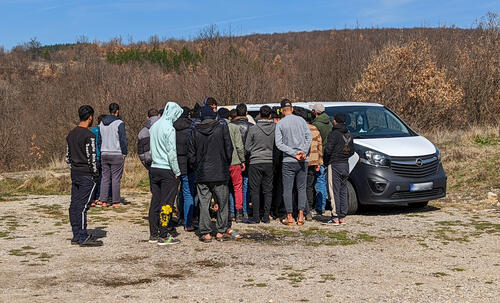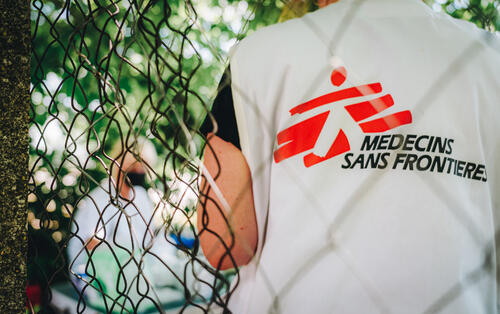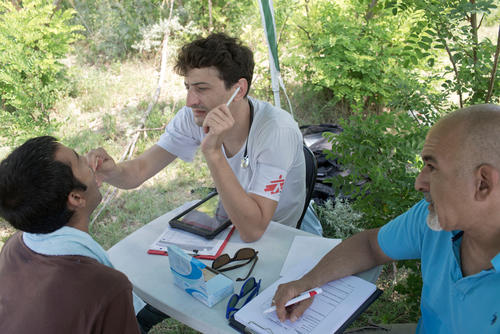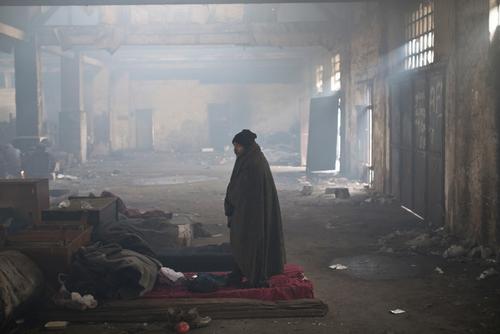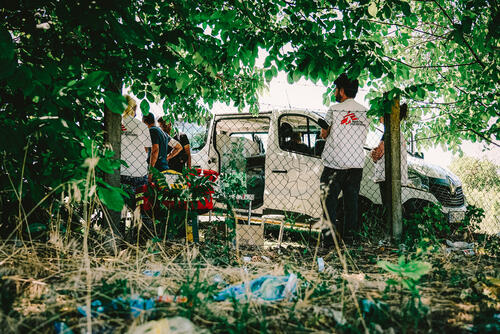
Wide shot of MSF workers standing by a barbed wire fence during a medical consultation of the MSF mobile clinic in Horgos 2 border crossing area in Serbia. MSF is present in Serbia since 2014 providing medical care to migrants in transit through the Balkan route. In 2022 MSF is operational in informal settlements at the Serbian-Hungarian and Serbian-Romanian borders, with two mobile clinics providing primary health care, psycho-social support and health promotion activities.
MSF workers standing by a barbed wire fence during a medical consultation of the MSF mobile clinic in Horgos 2 border crossing area in Serbia. Serbia, July 2022.
© Evgenia Chorou/MSF
Ebola disease in DRC: find out how we're responding
Learn more

In Serbia, we provide general medical consultations and essential items, such as blankets and hygiene kits, to migrants and refugees in Belgrade, and to people on the move in border areas.

Our activities in 2024 in Serbia

Data and information from the International Activity Report 2024.

MSF in Serbia in 2024 In 2024, Médecins Sans Frontières (MSF) continued to provide essential medical and humanitarian assistance to refugees and migrants living in precarious conditions in Serbia.
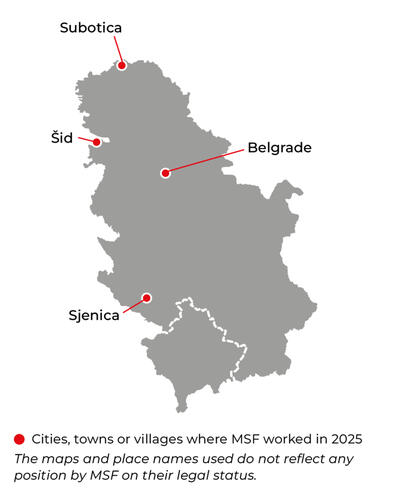
Country map for the IAR 2024.
© MSF

Many of our patients in Serbia, who were attempting to cross the Balkans in search of safety in other European countries, reported that they had been subjected to violence and pushbacks by state authorities at the borders. Others said they had experienced extreme levels of violence, including sexual assaults, in their countries of origin and/or during their journeys. Throughout the year, our teams conducted general medical consultations for people, no matter their housing situation. 

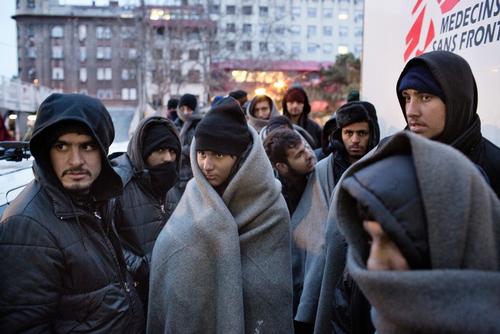
In the southern region bordering Bulgaria, we offered assistance to people on the move. We ran mobile clinics in these areas, delivering general healthcare and distributing essential relief items, such as blankets, warm clothing, footwear, and hygiene kits. We collaborated with local civil society organisations. As well as providing care for victims of physical and psychological violence, including various forms of inhumane and degrading treatment, MSF teams treated people whose health had been affected by freezing winter temperatures and unsanitary living conditions, and a lack of food, clean clothes, and medical care.

MSF continued to denounce the deadly consequences of European migration policies, in particular the increased securitisation and violent measures to which refugees and migrants are subjected, as they attempt to seek safety or continue their journeys to other European countries.
 

In 2024

Serbia

Language
English