


Your donation matters
Your gift will help us bring lifesaving medical care to people in need.
Emergencies come in many forms: armed conflicts, disease epidemics, natural hazards, malnutrition crises, and more. Your gift ensures that when an emergency happens, our teams are there to relieve suffering and save lives.
Rounded figures taken from 2024 International Financial Report
Your donations at work
Democratic Republic of Congo (DRC)
Read More
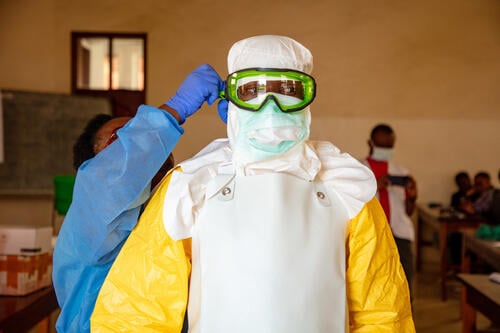
Ebola disease in DRC: MSF scales up response to a rapidly evolving outbreak
In Democratic Republic of Congo, MSF teams are scaling up our response to the Ebola disease outbreak.
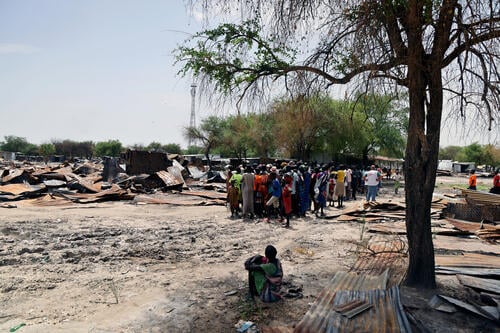
South Sudan
Read More
Attacks on healthcare and civilians, rape, hunger: South Sudan is at a breaking point
In South Sudan, escalating violence is increasingly harming people and undermining access to lifesaving care. MSF's latest report details the violence people face in the country, including attacks on healthcare.
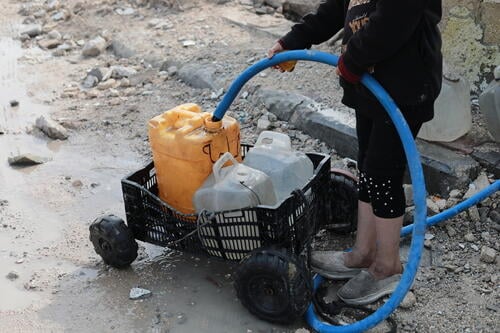
Gaza Israel war
Read More
Israel uses water as a weapon of collective punishment against Palestinians in Gaza
MSF's latest report documents how Israeli authorities have used access to water and sanitation services as a weapon to collectively punish people in Gaza, Palestine.
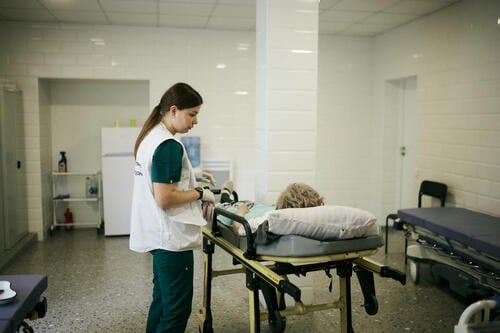
Ukraine
Read More
When chronic illness turns critical in Ukraine
In Ukraine, war-related insecurity and extreme stress are causing people to delay seeking medical care, leading them to develop preventable complications.
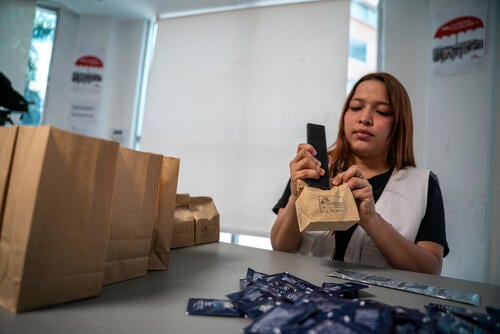
Honduras
Read More
A safe space for LGBTQI+ patients in San Pedro Sula
In San Pedro Sula, Honduras, MSF teams provide medical and mental health care tailored to the needs of LGBTQI+ people and people who engage in sex work.
Lebanon
Read More
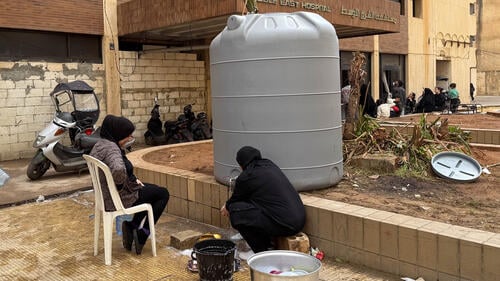
Bringing clean water and sanitation services to forcibly displaced families in Lebanon
MSF is supporting families who have been forcibly displaced by Israeli bombardments and evacuation orders in Lebanon. After visiting a shelter in Beirut, Maryam Srour reflects on the work to bring clean water and sanitation services to unfit buildings.
Conflict in Sudan
Read More
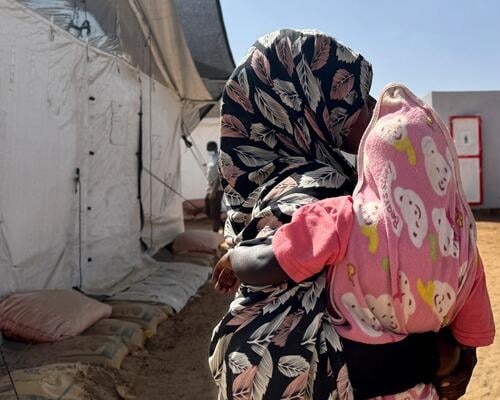
MSF report finds there are no safe places for women and girls in Darfur
Our latest report on Sudan documents widespread and systematic sexual violence across roads, fields and displacement camps in Darfur, both in areas affected by conflict and far from frontlines.
Yemen
Read More
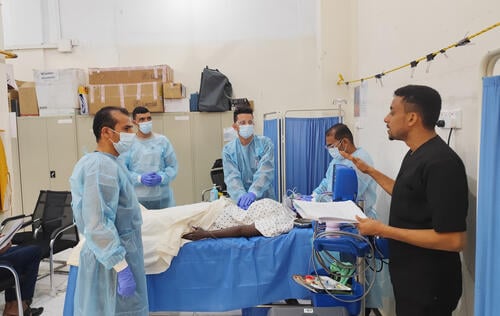
Nurses in Yemen strengthen their skills through MSF Academy for Healthcare
The MSF Academy for Healthcare strengthens nurses' skills through practical training, focusing on improving the quality of care and the wellbeing of patients in rural areas like Ad-Dahi.
Somalia
Read More
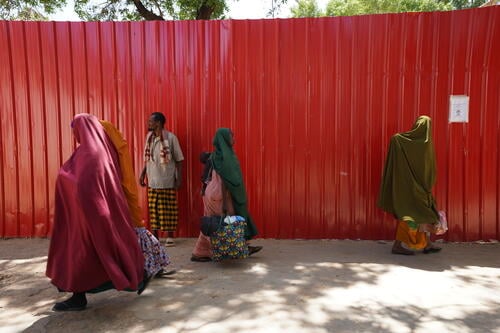
Walking for her life: the triple healthcare delay for women in Somalia
Shaheen BiBi, MSF's midwife activity manager at Bay Regional hospital in Somalia, describes the “triple delay” women often encounter in seeking, reaching, and receiving care.
Conflict in Sudan
Read More
Sudan: MSF treats around 170 people for drone injuries in two weeks after strikes hit civilian areas
MSF teams are treating people who have been injured by drone strikes in Sudan.
FAQs
Where does MSF’s money come from?
We pride ourselves on the incredible support of our donors. Our funding structure relies on lots of donations from millions of individuals around the world. It is our donors, who fuel MSF’s work.
In 2024, 98 per cent of our income came from some 7.1 million private donors. It is thanks to the generosity of these private supporters – mainly individuals like you, but also companies and private foundations – that we are able to operate independently and provide humanitarian assistance in some of the world’s most insecure environments and forgotten crises.
The remaining two per cent of our income came from public institutions, other sales and financial transactions.
For more details, see the International Financial Report.
How much money does MSF raise every year?
In 2024, we raised a total of €2.36 billion euro: 98 per cent of that came from private donations.
For more details, see the International Financial Report.
How is the money spent?
Your donations pay for millions of consultations, surgeries, treatments and vaccinations every year.
We are a non-profit organisation and 79% of our financial resources are allocated to fulfilling our social mission: 63% to our humanitarian programmes, 12% to support our projects and programmes, and 3% to our bearing witness (témoignage) activities. The rest is spent on general management and fundraising costs. We also maintain reserves that allow us to respond immediately to a crisis without having to wait for an appeal. The use of MSF funds is tightly controlled and the audited financial reports are publicly available.
The overwhelming majority of our programmes are implemented directly by our teams. In other cases, we provide support to local medical networks who can directly access those in need. This is notably notably the case in Syria where some areas of the country are not directly accessible to our teams.
For a more detailed breakdown of our sources of income, by activity and by geographic area, see the International Financial Report.
Where is the money spent?
Where is the money spent? > In 2024, 59% of programme expenditure was spent in Africa, 30% was spent in Asia, and the rest in Europe, the Americas, Oceania and for transversal activities, such as search and rescue.
We spent the most in the Democratic Republic of Congo, Yemen, South Sudan, Nigeria, Sudan, Central African Republic, Chad, Afghanistan, Haiti, Palestine and Syria.
The International Financial Report gives more details of the geographic distribution of expenditure. It also provides breakdowns of expenses and funding for all the countries where MSF has significant programme activities in a given year.
Does MSF restrict donations from companies?
We don't accept contributions from companies and industries whose core activities may be in direct conflict with, or limit our ability to provide, medical humanitarian work. Hence, we don't accept money from pharmaceutical and biotechnology companies, extraction industries (such as oil, natural gas, gold, or diamonds), tobacco companies and arms manufacturers.
Additional limitations may exist in the national giving acceptance policies of the countries where MSF is fundraising.
Does MSF accept donations of medical products?
MSF does not accept in-kind donations of medical products or health technology. Only under exceptional circumstances, and on a case-by-case basis, MSF may consider accepting such donations according to the criteria and conditions set forth in MSF’s Policy for In-Kind Donations of Medical Products and Health Technology (PDF).
Can I choose where my money goes?
We appreciate that some of our supporters may have a particular interest in a country or programme in which we work. While in some circumstances it is possible to have your gift directed toward a specific programme or country, we ask that you contribute with unrestricted funding.
Unrestricted general donations give us the ability to direct funds where the needs are greatest, including under-reported and neglected crises.
MSF would not be able to swiftly respond to emergencies in Central African Republic, South Sudan or Yemen, nor provide lifesaving care to hundreds of thousands of people living with HIV, if not for the general support from our donors worldwide.
Where can I find MSF's detailed financial information?
Further details on where our money comes from, how much we raise, and how we spend it, can be found in our International Financial Report.
The International Financial Report also gives details on where we spend your money, showing the geographic distribution of our expenditure, and providing breakdowns of expenses and funding for all the countries where MSF has significant programme activities in a given year.
Warning
Scams, hoaxes and frauds involving MSF
Please be aware there have been cases of individuals posing as Médecins Sans Frontières (MSF) staff in order to scam people out of money.
MSF has received reports of third parties attempting to fraudulently obtain money on our behalf via email, social networking websites or apps, or in person at public locations.
The following is a list of scams and hoaxes that have been brought to our attention (please note this list is not exhaustive):
- An individual or individuals carrying out what appears to be fraudulent collections of money in public locations, while pretending to represent MSF.
- People posing as MSF staff in emails asking for reimbursements for donations, sometimes naming actual MSF staff or senior management in their appeals in order to bring a sense of credibility.
- People posing as MSF staff requesting money to pay for individual medical procedures for fictitious patients.
- People posing as MSF staff who have been detained on their way home and asking for money to be transferred in order to secure their release from detention.
- People posing as MSF staff, or acting on behalf of MSF staff, on social networking websites or apps in order to lure unsuspecting members of the public to send funds to cover the travel costs of the alleged MSF staff member to return from a field mission.
- People posing as MSF staff who have been detained on their way home and asking for money to be transferred in order to secure their release from detention.
- People posing as MSF human resources or recruitment staff asking people applying for a job with MSF for money or to pay a fee.
All MSF staff are instructed to call their home MSF office if they find themselves in an unfortunate situation like losing their passport or if they have trouble with a visa. We then provide all the support they need to get home.
MSF staff in the field will also have access to funds in an emergency situation and so have no need to request financial support from anyone, for either themselves or their patients.
MSF does not charge a fee at any stage of the recruitment process (application, interview meeting, processing, training or any other fees).
Unfortunately there is nothing we can do to stop scams such as these and others from happening. If you are unsure if you are the subject of a scam or fraud involving a supposed MSF staff member, please get in contact with your local or nearest MSF office. You can also get in touch with your country’s local consumer commission or fraud reporting office.