



Ebola disease in DRC: find out how we're responding
Learn more
8000 Results
 
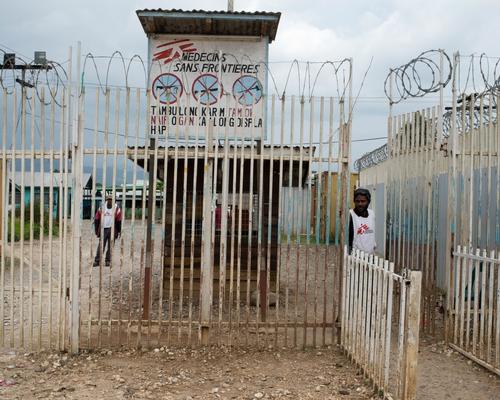
The entrance to the MSF run Family Support Centre and Tari Hospital in Hela Province in Papua New Guinea. MSF runs a Family Support Centres connected to this hospital. MSF Family SUpport Centres have developed a model of care that offers five essential services to all family and sexual violence survivors in a single session. This package of care ensures that integrated medical and psychosocial assistance is provided as soon as possible, establishing a ‘one-stop shop’ so that victims of violence are not forced to move back and forth between different service providers. Since 2009 MSF has treated 27,993 survivors of family and sexual violence care in the country and carried out 68,840 major and minor surgeries, one third of which were for violence-related injuries. However, across Papua New Guinea, there is simply not enough comprehensive medical and psychosocial care for survivors of family and sexual violence. As a result, many survivors are left on their own to suffer in silence. Only seven of 16 Family Support Centres across the country are deemed to be fully functional by national authorities, with services in the remaining nine centres varying greatly. Too often, the minimum package of medical care that should be available to all survivors of violence exists only on paper.
Papua New Guinea

Return to Abuser

“Return to Abuser” report uncovers the gaps in services and systems trapping women and children in cycles of severe family and sexual violence in Papua New Guinea.The report includes comprehensive data from more than 3,000 survivors of family and sexual violence that MSF treated in 2014-15 in its two projects in both rural Tari, in Hela Province, and the capital, Port Moresby, Report - 1 Mar 2016
 
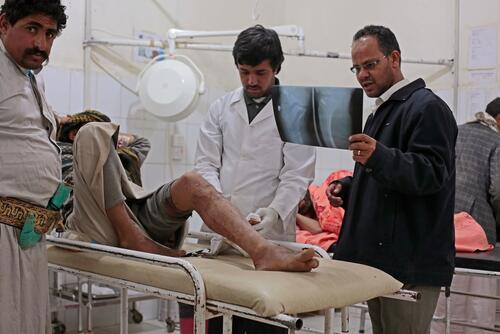
Doctors examine an x-ray at the bedside  of a patient, 20 February 2016, in the MSF-run Khmer Hospital in Amran, Yemen.
Yemen

Practising medicine under fire

"Even though conditions here are not easy, and the work can be challenging, I am pleased to be working here," says Dr Mariela Carrara. Voices from the Field - 26 Feb 2016
 
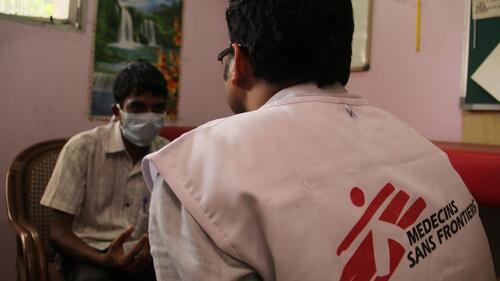
Hep-C patient being counselled by Psychosocial counsellor at MSF Mumbai clinic on dealing with side effects of the treatment regimen.
India

Patent challenge hearing on Gilead hepatitis C drug sofosbuvir starts in India

‘Patent opposition’ seeks to ensure millions of people left out of Gilead licensing deals can access affordable generics Project Update - 26 Feb 2016
 
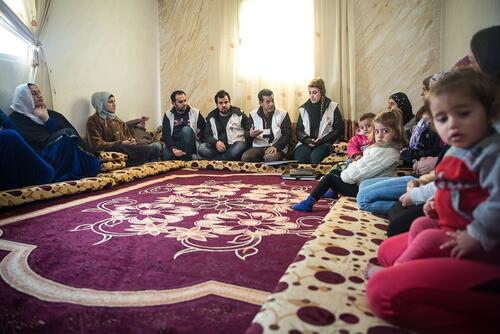
Psychosocial and health promotion workers organize group sessions to pass health related messages to the community. Poor living conditions and an uncertain future have a great impact on the wellbeing of residents. Many people have left the camp to try to reach Europe and many more are making plans.
Iraq

Seven months in an endless race to provide access to aid

"A number of our staff left Iraq to go to Europe in search of a better life, especially staff who were themselves refugees in Iraq. Some left with their families – despite knowing the risks they faced they saw no alternative," says Robert Onus, MSF logistics team leader. Voices from the Field - 25 Feb 2016
 
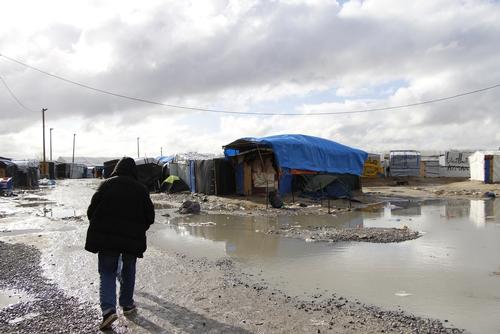
The weather is cold, rainy, muddy and windy, there are many puddles of water. Asylum seekers in the jungle are trying to improve their living conditions.
France

Refugees face ‘slow death’ in Calais' Jungle

“This is how we live. Since when do people in modern Europe live like this? They put us in camps without decent food. We just sit around. We count the days. It’s a slow death,” says said Mohammad who fled Syria’s war. Voices from the Field - 25 Feb 2016
 
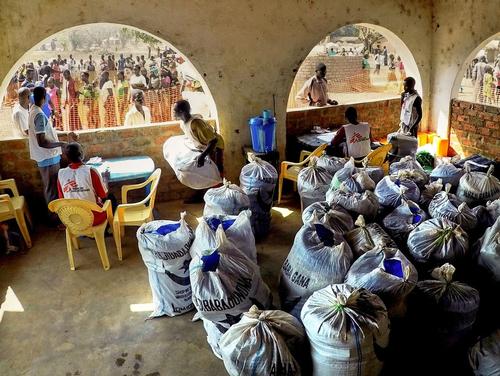
NFI distribution to 450 families who lost their belongings in a fire in Batangafo IDP camp
Central African Republic

MSF distributes relief item kits to fire-displaced families in Batangafo

Project Update - 25 Feb 2016
 
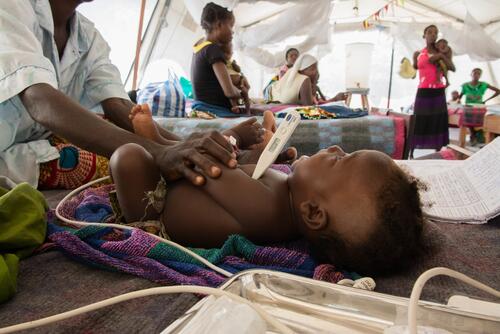
At Manono General Hospital, MSF has set up extra tents to increase pediatric care capabilities (fifty additional beds have been made available for intensive care and fifty for the nutritional therapeutic unit). 1424 patients have been treated in the pediatric ward between January 19 and February 8, 2016.

An intensive nutritional therapeutic unit takes care of malnourished children with complications. More than a hundred children have been admitted in this unit since the beginning of operations.
Democratic Republic of Congo

Children who survived measles are now suffering from malnutrition and malaria

"In a region where supplies to treat severe acute malnutrition are constantly out of stock, leaving after the measles epidemic amounted to abandoning the malnourished children to their fate, especially those who had survived measles," says Narcisse Wega, an MSF emergency coordinator. Project Update - 24 Feb 2016
 
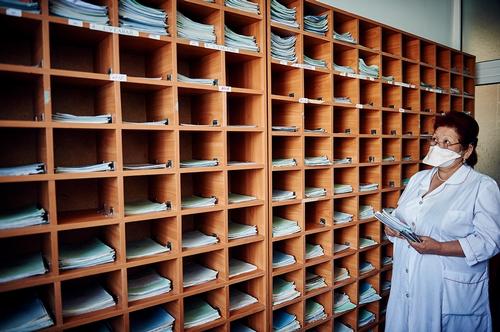
TB-cabinets are  important for an effective walk-in treatment. Here ambulatory treatment, psychosocial counselling for patients and their families, and social packages (nutritional support, hygiene kits and transport money) are provided to help patients adhere to treatment.
Ashyrkan Turdusheva (chief-nurse) storing patient data.
Project Update

Developing countries hit with high price for important new tuberculosis drug

More than two years after drug approved, only 180 people globally have received it
Press Release - 24 Feb 2016
 
MSF has a medical team which works in day and night shifts to provide medical care to the people. To protect people from freezing winter temperatures MSF is setting up large shelters. Which will temporarily house to up to 150 people each.
Mediterranean migration

EU Migration Crisis Update - February 2016

Project Update - 24 Feb 2016
 
MSF also supports the CAR’s National Program, which is supposed to vaccinate all children following a predefined timetable. Unfortunately difficulties of access, the failures of the health system and the recent upsurge in violence have long interrupted the program.
Vaccination

High vaccine prices hamper immunisation efforts in Africa, but are missing from agenda of key vaccination conference

"If vaccine prices continue to spiral out of control, we will continue to see countries in Africa and around the world faced with difficult decisions about which deadly diseases they can and can’t afford to protect their children against," says Dr Myriam Henkens, International Medical Coordinator at MSF. "Ministers at this conference literally can’t afford to waste this opportunity to again speak out against high prices and push for change." Press Release - 24 Feb 2016
Four mothers posing in a corridor of the Hospital in Bili. All four of them are staying in the hospital with their child, that's suffering from a severe case of malaria. Since the beginning of the project in 2016, the pediatric ward already treated more than 4.000 cases of complicated/severe form of malaria.
Médecins Sans Frontières (MSF)

Independent medical humanitarian assistance

We provide medical assistance to people affected by conflict, epidemics, disasters, or exclusion from healthcare. Our teams are made up of tens of thousands of health professionals, logistic and administrative staff - most of them hired locally. Our actions are guided by medical ethics and the principles of independence and impartiality. We are a non-profit, self-governed, member-based organisation.

Learn more