



Ebola disease in DRC: find out how we're responding
Learn more
8000 Results
 
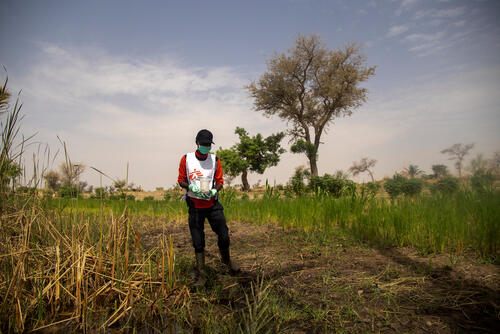
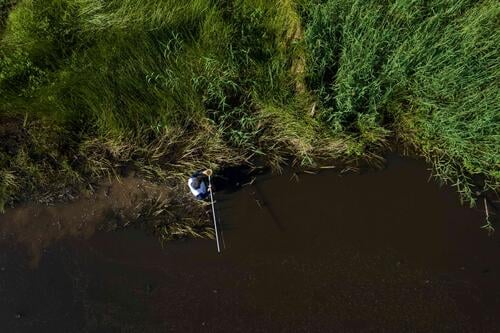
MSF teams treating the different water points in the village of Ara in the commune of Bandé in the department of Magaria in south of Niger.  

Since June 2021, MSF launched water treatment activities in 15 villages in the commune of Bandé in Magaria, south of Niger, to prevent the development of the mosquito larvae into full grown mosquitoes aiming at decreasing the malaria cases.

This region of Niger is well-known for being one of the richest in terms of water resources, and is one of the regions with the highest rainfall in the country. However, these large quantities of water, very close to people’s homes, are a breeding ground and habitat for different types of mosquito, including anopheles, which are responsible for the transmission of malaria throughout the year. When it rains the surface area of the water increases by three to four times, creating more opportunity for egg-laying and larvae development.
Niger

Combating malaria through water treatment for communities in Niger

Since June, through water treatment and insecticides, our teams have been combating the development of mosquito larvae into full-grown mosquitoes, thus curbing malaria cases in Niger ahead of the rainy season. Project Update - 14 Sep 2021
 
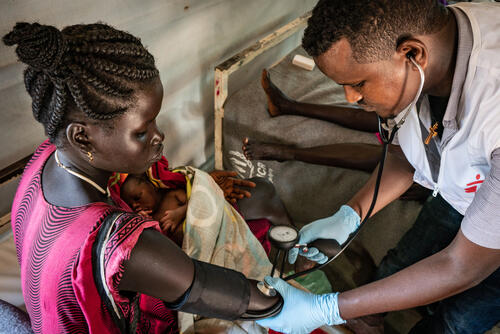
Maternity – fresh mothers with one to two day old babies.
Ethiopia

Amid enormous needs in Ethiopia, MSF forced to suspend majority of healthcare

Despite complying with the Ethiopian authorities’ requests and undertaking all required action, MSF has been forced to suspend almost all activities in Ethiopia while the needs of the people are enormous. Statement - 10 Sep 2021
 
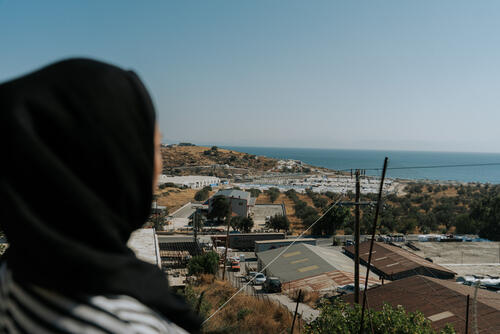
Mariam* is on Lesbos with her family, her husband and her 2-year-old girl, while she is also expecting another child.

We are a family of three. Me, my husband and my two-year-old daughter. I am also 8 months and 3 weeks pregnant. I arrived on Lesbos two years ago. I have lived in Moria camp and now I live in the new camp of Kara Tepe.

When the Moria camp was on fire, everywhere we looked, there was fire. We were in the middle of it, so we went to the mountains to protect ourselves. After the fires, we were in the streets for around ten days. We didn’t have any food and water. Food was not enough for everyone.

Now in Kara Tepe camp, the living conditions continue to be difficult. There is cold, there is heat, we cannot go to the toilet easily, we don’t have a good life here. I don’t feel well. It’s two years that I haven’t gone to a private toilet. We are in a bad mental health situation.

Right now, I don’t know if we can get recognized as asylum seekers or if we are going to get a rejection. We also have problems with getting permission to get outside of the camp. Until now, my daughter has never been to a park. I wish we could move freely, so that I could take my daughter to a park.

She is very aggressive because of what she has experienced here. She “likes” to fight all the time. She doesn’t like to play. She’s not a child who likes to play with friends, to laugh, to speak and play with dolls. All there is in her mind is the the violence she has witnessed here. The fights in the camp, the time that we had to run away, the fires, the teargas. During this age, it is important to care about the little girl, to give her a lot of love and take her to nice places, but this is not possible here.

For example, when she was learning to walk, there were no walls for her to grab to be able to stand. All we had was a blanket hanging so when she was trying to stand, she would grab it and it would fall.

My wish is to get better psychologically. And to be able to go to work, me and my husband and live like a normal person. I don’t like to be told where to go, where not to go and what time to go in and out. I wish, like all the people do, to have a good life without any stress and to have a house and for my daughter to at least play in the house.
Greece

One year on from Moria fire, EU denies dignity to migrants trapped on Greek islands

A year after a fire tore through and destroyed Moria camp, on Lesbos, Greece, thousands of refugees remain on the island, with the EU refusing to provide dignity to those trapped there. Project Update - 10 Sep 2021
 
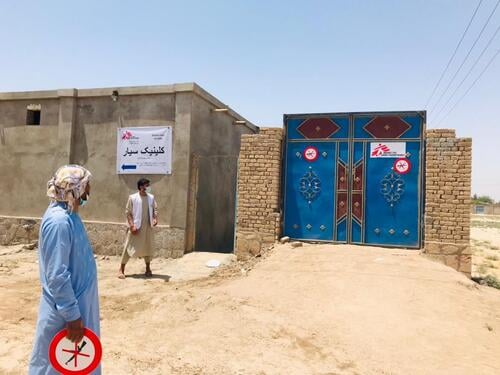
On 6 July MSF set up a temporary clinic for people displaced by heavy fighting around Kunduz city. 

The clinic team carried out over 3,400 consultations during the first 12 days. The project is run by a nine-person team, including doctors, nurses and a health promoter.
Afghanistan

Overcoming obstacles: Treating trauma in Kunduz

A medic in Kunduz describes treating trauma during and after the fighting: from bomb blasts to gun-shot wounds, to road traffic accidents – it’s all in a day’s work. Voices from the Field - 10 Sep 2021
 
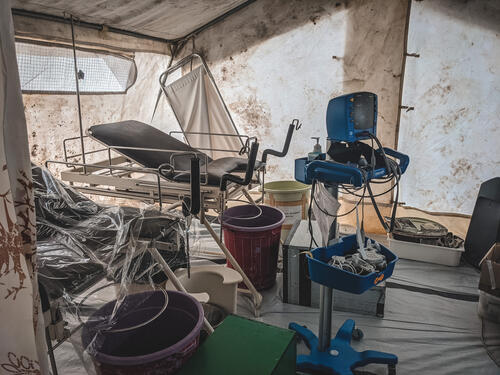
A tent where MSF’s team continued to deliver babies and provide other urgent care to pregnant women after the hospital in Port-a-Piment was damaged by the earthquake.
Haiti

Complex needs of earthquake survivors require continued specialised care

Despite the obstacles and difficulties, the needs in the southernmost region of Haiti continue as MSF works to provide continued care for those most affected by the earthquake. Project Update - 9 Sep 2021
 
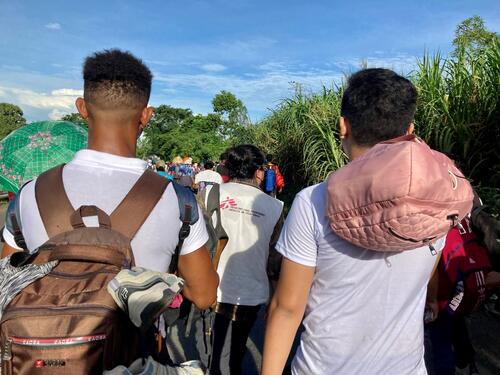
Around 500 migrants started a caravan on Saturday 4 September from the southern Mexican city of Tapachula towards the northern part of the country in order to protest about their precarious situation. Dozens of thousands of migrants from Central America and South America have been trapped in Tapachula for months, after being deported from the USA or crossing from Guatemala. An MSF team accompanied the migrants during the first part of the caravan to provide medical assistance to them.
Central American migration

US and Mexico asylum policies leave migrants in deplorable and dangerous conditions

Mass deportations and failed asylum policies leave tens of thousands of migrants stranded and in danger along Mexico’s border cities. Press Release - 9 Sep 2021
 
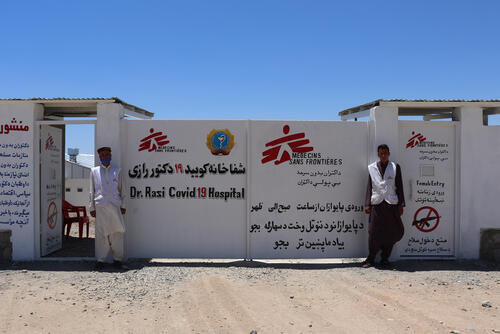
MSF staff members Jamalayin Dalary and Mohammed Arif pictured at the entrance to MSF's new 32-bed COVID-19 treatment centre in Herat. MSF will focus on the treatment of  patients with severe COVID-19 in need of oxygen therapy. Patients will be referred from existing COVID-19 centres in the area.
Afghanistan

Afghanistan: medical needs grow as international organisations suspend activities

An MSF medic in Herat, Afghanistan, describes the reality of working in the city since the Taliban took control and almost all other organisations suspended operations. Voices from the Field - 6 Sep 2021
 
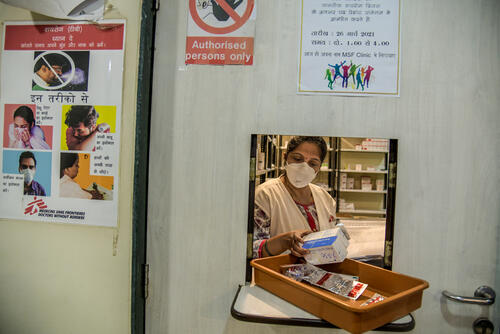
MSF Pharmacist dispensing Bedaquiline and Delamanid based DRTB regimen MSF independent Clinic, Mumbai-India
Access to medicines

Lifesaving TB medicines still out of reach for children in high-burden countries

As the World Health Organization recommends children of all ages have access to all-oral treatment for drug-resistant tuberculosis, we call on governments to allow production of these lifesaving drugs to be affordable for all. Press Release - 3 Sep 2021
 
El biólogo de MSF, Melfran Herrera, busca larvas de mosquitos Anopheles, en una laguna del estado Sucre, al noreste de Venezuela, para comprobar la densidad existente y diseñar estrategias efectivas para el control vectorial y la prevención de la malaria. Los equipos de MSF trabajan junto a autoridades locales, para disminuir la incidencia de la enfermedad en el estado. 
	
MSF biologist Melfran Herrera searches for Anopheles mosquito larvae in a lagoon in Sucre state, northeastern Venezuela, to check the existing density and design effective strategies for vector control and malaria prevention. MSF teams are working with local authorities to reduce the incidence of the disease in the state.
Venezuela

Tracking mosquitoes to prevent malaria in Venezuela

The incidence of malaria cases has decreased by 80 per cent in areas where MSF teams work alongside local authorities in the northeastern state of Sucre, Venezuela. Project Update - 1 Sep 2021
 
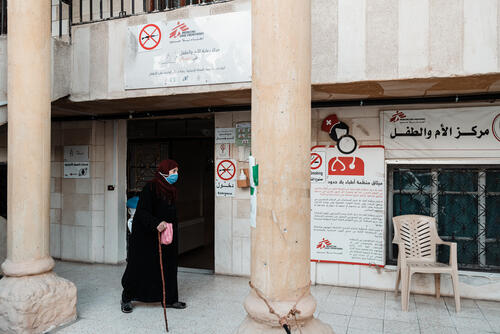
An old lady comes out of her consultation at the MSF's clinic in Arsal. 

MSF has been providing free primary healthcare to vulnerable communities in Arsal, in the north of Bekaa Valley, since 2012. MSF’s clinic in Arsal offers medical care for patients with non-communicable chronic diseases (NCD), acute paediatric consultations, sexual and reproductive health services and mental health support.
Lebanon

Healthcare system in Lebanon disintegrates as political vacuum persists

As the situation in Lebanon deteriorates and the economic crisis worsens, the healthcare system has been pushed to its limit, leaving the most vulnerable without access to essential treatment. Project Update - 1 Sep 2021
Four mothers posing in a corridor of the Hospital in Bili. All four of them are staying in the hospital with their child, that's suffering from a severe case of malaria. Since the beginning of the project in 2016, the pediatric ward already treated more than 4.000 cases of complicated/severe form of malaria.
Médecins Sans Frontières (MSF)

Independent medical humanitarian assistance

We provide medical assistance to people affected by conflict, epidemics, disasters, or exclusion from healthcare. Our teams are made up of tens of thousands of health professionals, logistic and administrative staff - most of them hired locally. Our actions are guided by medical ethics and the principles of independence and impartiality. We are a non-profit, self-governed, member-based organisation.

Learn more