



Ebola disease in DRC: find out how we're responding
Learn more
8000 Results
 
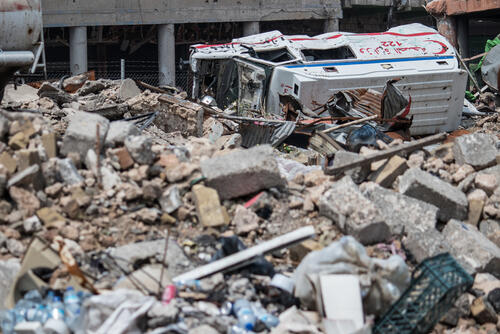
Mosul’s old town experienced intense shelling, aerial bombing and attacks with improvised explosive devices (IED) during the conflict to retake the city from the Islamic State group in 2016/17. Much of the old city is still inaccessible due to the destruction and presence of IEDs, unexploded ordinance (UXO) and booby traps. 

Between 5,000 and 7,000 people have returned to their homes in Mosul’s old city, despite the danger of explosive remnants of war. They face extremely difficult conditions, often living without water and electricity and in partially damaged houses.
War and conflict

Counter terrorism “adds salt to the wound” in providing medical care in conflict

A new report paints a bleak picture of the reality of trying to provide impartial medical care to people in conflict, often undermined by counter-terrorism measures. Project Update - 18 Oct 2021
 
At Hôpital Immaculée Conception in Les Cayes, MSF staff provide physiotherapy for patients injured in the earthquake, helping people regain strength and mobility.
Haiti

Two months after the earthquake, health needs remain high

Two months on from the 14 August quake in Haiti, which destroyed infrastructure and injured thousands, the number of people with earthquake-related and other medical needs remains high. Project Update - 15 Oct 2021
 
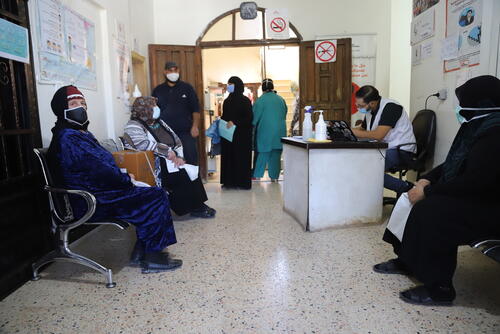
MSF clinic Hermel
Lebanon

Breaking barriers to mental health care in Lebanon

The economic crisis in Lebanon is affecting the health sector, leading to the deterioration of mental health services which are hugely underfunded and understaffed. MSF is supporting the Lebanese Ministry of Public Health to include mental health services under primary healthcare services. Project Update - 14 Oct 2021
 
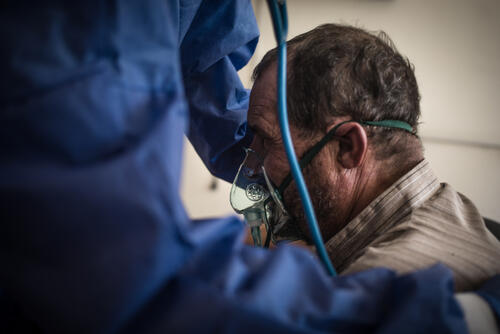
A patient receives care in the COVID-19 ward of Raqqa National Hospital, in northeast Syria.

MSF has now moved it's COVID-19 response from Raqqa National Hospital to Raqqa Covid-19 centre.
Syria

Worst wave yet of COVID-19 in northern Syria overwhelms health system

The already-struggling health system in northern Syria has been hit hard by the most severe wave of COVID-19 yet. Healthcare facilities and humanitarian organisations are struggling to cope with the extent of this new wave. Press Release - 13 Oct 2021
 
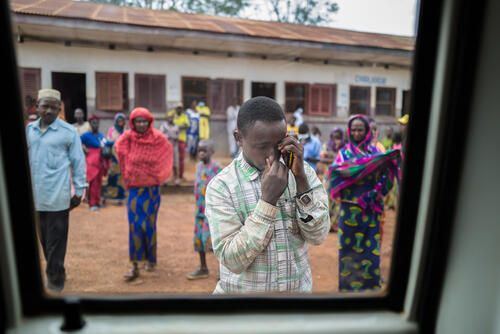
Sallet's best friend cries at the farewell, when he is transported to the Bangui airport. During the week and a half that Sallet has spent in the hospital, his friend has slept outside and has spent as much time as he could by his side.
Central African Republic

As cycle of violence in CAR continues, people struggle to find support

A new cycle of violence that broke out in Central African Republic at the end of 2020 has again worsened the already difficult situation for people in the country. Photo Story - 11 Oct 2021
 
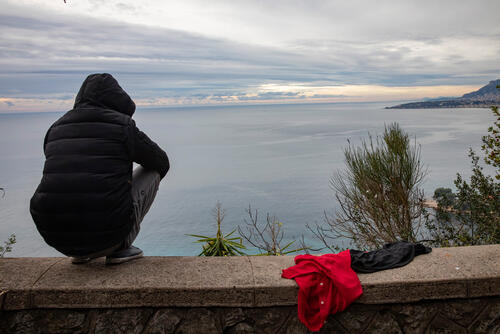
On the streets, along railway tracks, in abandoned buildings and on the beach: this is where migrants and refugees live in Ventimiglia after authorities closed the transit camp near the Roja River last July. Despite its shortcomings, the camp was a place to stay for people on the move. Now there is nowhere official to receive them.
Mental health

Mental health care needs enormous around the world

In the past decade, MSF has shifted its approach to mental health care around the world, ensuring that it is at the forefront of our activities from Latin America to Africa and everywhere in between. Project Update - 10 Oct 2021
 
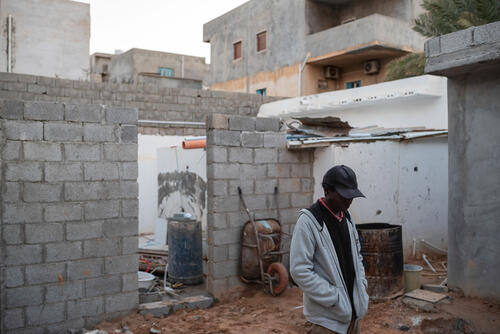
Muawia fled from the war in Darfur, Sudan to Libya 10 years ago. He left his family behind. He now survives with the help of some friends and some daily jobs in Tripoli. He says that the living conditions for migrants and refugees are very dangerous, as they are continuously subjected to robbery and violence in the streets and are often kidnapped for extortion. He says he was kidnapped twice by criminal groups and during this time endured torture, including by the use of hot objects to burn his flesh.
Libya

Thousands beaten up, detained following days of mass arrests in Tripoli

Thousands of refugees and migrants have been rounded up in mass arrests - often violent - in Libya's capital Tripoli, where they are being held in crammed and awful conditions in detention centres. Press Release - 6 Oct 2021
 
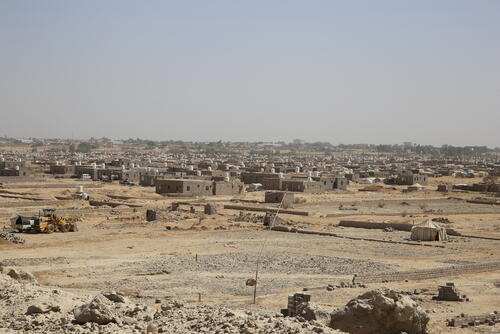
Al Noor camp for internally displaced Yemenis, which is one of the largest camps in Marib. MSF provides primary healthcare in this camp through a mobile clinic twice a week?

مخيم النور للنازحين والذي يعد من أكبر المخيمات في مأرب. تقدم أطباء بلا حدود الرعاية الصحية الأولية في هذا المخيم عبر العيادة المتنقلة.
Yemen

People treated following missile attacks on residential area in Marib governorate

MSF has provided care to people, and urged once again for warring parties to respect International Humanitarian Law, following missiles fired on a residential area in Marib governorate, Yemen. Project Update - 5 Oct 2021
 
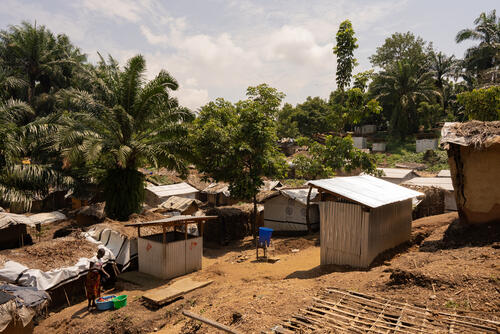
Section of the Ugudo Zii displaced people site, Angumu health zone.
Democratic Republic of Congo

Healthcare for the community by the community

As thousands of people have been displaced by natural disasters and violence in DRC, MSF is working with the community to ensure essential healthcare is still provided. Project Update - 3 Oct 2021
 
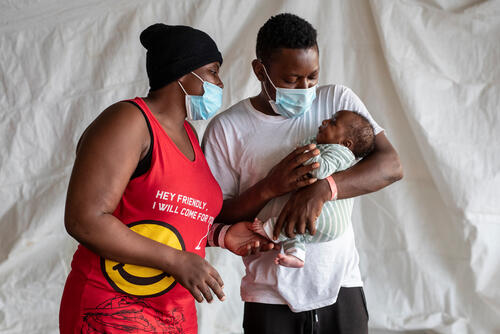
Baptiste* (24 years old), and Sophie* (27 years old), a couple from Cameroon, were rescued in September 2021 along with their 7-week-old baby, Bienvenu*. They undertook the perilous journey across the central Mediterranean to find a better place for Bienvenu to live. While safely on board the MSF-operated search and rescue vessel, the Geo Barents, they decided to share their story of a terrifying journey.

While on board the Geo Barents, Baptiste recounts the past months: “In 2021, Sophie and I arrived in Libya. I had never seen people behave in such an inhuman way. We have been treated worse than animals. En-route, I witnessed a lot of violence, sexual violence and group rape. We finally found a hangar in a neighborhood of the capital to live in. We found jobs, and we managed to eat something. These were really hard times, I felt desperately alone. I kept on living because of my family. 
During that period, I got kidnapped and detained in a small, isolated room. The kidnappers forced me to call my mother in Cameroon, to ask her to pay a ransom or I would die. My mother had to sell the small piece of land we had. It was the only thing she had left. After my family paid the ransom, they beat me again. I spent five days locked in that room before I got free. Eventually, some man dealt with them to get me out and he helped me afterwards, to take care of myself. 
I will always remember the day our child was born, on the 6th of August. My wife Sophie had to give birth to our baby at “home”, because access to health care doesn't exist in Libya for black people. I was treated like rubbish; a dog had more value than us. We had no other option than give birth at home. 
Sophie, the mother of the newborn, adds: “On the day of birth, I found myself without any medical care. During the whole pregnancy, I didn't even know whether my baby was in good health. I was frightened. The day of the birth a neighbour came to help me, but she was more nervous than me, her arms were shaking all the time. The birth was very hard. After Bienvenu's birth, we rarely went out as the risk of kidnapping was so high. My child didn't receive any medical attention. “
Baptiste finally tells us: “It was incredible when Bienvenu was born safely. Only God could do that. I saw with my own eyes this unbelievable thing. I cannot describe with words what I felt when I held him in my arms. I started working even harder to get some money for the medicines and the food for our baby. I worked on a construction site for a man. When I learnt this man was also sending people to Europe, I explained my situation to him, and he accepted to help us crossing at sea."
END

*This story was collected by MSF Communications Manager on board of the Geo Barents, in September 2021. 
* Names have been changed to protect the identity of the survivors 
* Photo credit: Pablo Garrigós Cucarella/MSF
Mediterranean migration

Stories of survival at sea

After two rescue operations, 60 people were successfully brought aboard the Geo Barents ship on 20 September. Some of the survivors shared their incredible stories. Voices from the Field - 1 Oct 2021
Four mothers posing in a corridor of the Hospital in Bili. All four of them are staying in the hospital with their child, that's suffering from a severe case of malaria. Since the beginning of the project in 2016, the pediatric ward already treated more than 4.000 cases of complicated/severe form of malaria.
Médecins Sans Frontières (MSF)

Independent medical humanitarian assistance

We provide medical assistance to people affected by conflict, epidemics, disasters, or exclusion from healthcare. Our teams are made up of tens of thousands of health professionals, logistic and administrative staff - most of them hired locally. Our actions are guided by medical ethics and the principles of independence and impartiality. We are a non-profit, self-governed, member-based organisation.

Learn more