



Ebola disease in DRC: find out how we're responding
Learn more
214 Results
 
msf-placeholder
Uganda

MSF responds to meningitis epidemic in the West Nile region of northern Uganda

Since the first cases of meningococcal meningitis A were confirmed in two districts of the West Nile region of northern Uganda in early January, Médecins Sans Frontières (MSF) has been working closely with the Ugandan Ministry of Health (MoH) and the World Health Organization (WHO) to reduce mortality, minimize the spread of the epidemic, and strengthen the epidemiological-surveillance system. Project Update - 14 Feb 2007
 
msf-placeholder
Democratic Republic of Congo

MSF providing care to cholera outbreak victims in two health centres in Katanga province

"The fast response of teams in situ has been crucial for the quite low mortality rate in the outbreak (in our health structures)," said Dr. Silvia Morote. Project Update - 9 Nov 2006
 
msf-placeholder
Democratic Republic of Congo

Dirty hands disease: MSF emergency team fights typhoid fever epidemic in Kikwit

Since August 20, more than 650 cases of typhoid fever have been reported in Kikwit, Bandundu Province, in the Democratic Republic of Congo (DRC). A team from Médecins Sans Frontières' Pool d'Urgence Congo (PUC) is providing support to Kikwit's main hospital to ensure treatment of patients free of charge. Community workers are raising awareness among the population about basic hygiene practices, in order to halt this serious epidemic of the so-called "dirty hands disease." Project Update - 11 Oct 2006
 
msf-placeholder
Liberia

MSF responds to cholera outbreak in Liberia

"Despite recent improvements providing stand-pipe water to some areas of the city, the vast majority of the population have extremely limited access to safe drinking water. This, coupled with the appalling sanitation situation in the city reinforces the concern that the number of cholera cases will again rise this year," said Tom Quinn, MSF Head of Mission. Project Update - 28 Aug 2006
 
msf-placeholder
Papua New Guinea

Papua hit by simultaneous epidemics

MSF emergency teams fight disease outbreaks in two regions. Papua's health status is the lowest in Indonesia. Limited access to health facilities, lack of health education and poor sanitation leave large parts of the population vulnerable to outbreaks of disease. Project Update - 8 Jun 2006
 
msf-placeholder
Zambia

Cases still rising in cholera outbreak in Lusaka

At the beginning of February, more than 600 new cases were reporting every week. It is estimated that the outbreak has not yet reached its peak. The rainy season - when outbreaks usually occur - started in November and it will last until April. Project Update - 10 Feb 2006
 
msf-placeholder
Zimbabwe

Cholera outbreak

The outbreak appears to be under control for now, but torrential rains have been pouring down on Zimbabwe recently and could eventually worsen the situation. Containing the disease is a priority; if it reaches larger rivers and spreads to the lowlands the outbreak could be catastrophic. Project Update - 11 Jan 2006
 
msf-placeholder
Sudan

Nearly 200,000 people vaccinated against yellow fever in Kordofan, Sudan, in two weeks

Maintaining the cold chain that keeps the vaccines at the correct temperature meant 600 kilograms of ice had to be produced, packaged and transported every day. Project Update - 28 Dec 2005
 
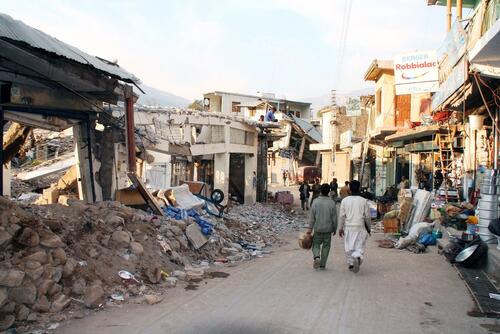
The center of Bagh town.
In Bagh, an MSF team supports a make-shift emergency hospital that has been set up by Ministry of Health staff in a school building. The town is badly affected with about 90 per cent of buildings destroyed or severely damaged.
Natural hazards

Natural disasters do not lead to epidemics

Philippe Guérin, Scientific Director of Epicentre - the epidemiology branch of MSF - explains that natural disasters do not harbour epidemics. He details the risks and priorities in the wake of the Kashmir earthquake, as he had done after the tsunami that struck southern Asia in December 2004. Project Update - 12 Oct 2005
 
msf-placeholder
Cholera

Cholera outbreaks across West Africa: MSF sends more staff and supplies

A number of factors conspire to make the outbreak during this year's rainy season much worse than in most years, including bad conditions of hygiene, overcrowding in certain areas, and a lack of safe drinking water. Project Update - 14 Sep 2005
Four mothers posing in a corridor of the Hospital in Bili. All four of them are staying in the hospital with their child, that's suffering from a severe case of malaria. Since the beginning of the project in 2016, the pediatric ward already treated more than 4.000 cases of complicated/severe form of malaria.
Médecins Sans Frontières (MSF)

Independent medical humanitarian assistance

We provide medical assistance to people affected by conflict, epidemics, disasters, or exclusion from healthcare. Our teams are made up of tens of thousands of health professionals, logistic and administrative staff - most of them hired locally. Our actions are guided by medical ethics and the principles of independence and impartiality. We are a non-profit, self-governed, member-based organisation.

Learn more