


Bamako, N’Djamena, Paris, New York, 23 September 2012 — A large-scale malaria prevention programme, consisting of the intermittent distribution of anti-malaria medicines, appears to be drastically reducing the number of new cases of the disease among young children during the peak transmission season, according to preliminary results from projects run by the international medical humanitarian organisation Médecins Sans Frontières (MSF) in two African countries.
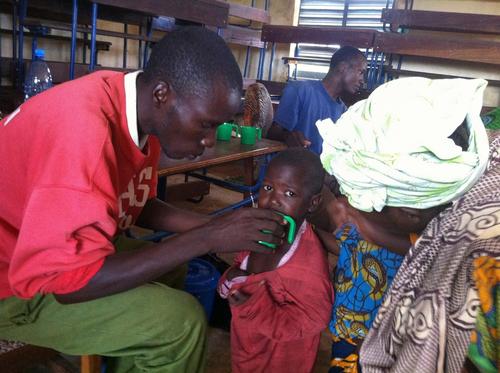
Anti-malaria medicines have been administered to approximately 175,000 children between three months and five years of age in Koutiala district, southern Mali and in two areas of Moïssala district, Chad: due to their weaker immunity, young children are at a higher risk of dying from malaria.
Preliminary results from the programme, known as seasonal malaria chemoprevention (SMC) show that the number of cases of simple malaria dropped by 65 per cent in the intervention area in Mali, and by up to 86 per cent in Chad. A significant decrease in cases of severe malaria has also been recorded.
"While we need to continue evaluating the broader impact of SMC, in terms of its overall effect on a population’s health, the initial results of our intervention show a spectacular decrease in the number of malaria cases,” said Dr Estrella Lasry, a malaria specialist at MSF. “The bottom line is that we are seeing a correlation with our intervention: more than half the beds in the paediatric ward of the hospital in which we work in Mali are empty, something we have never seen during the peak malaria season in prior years, when bed occupancy was typically over 100 per cent.”
The World Health Organization (WHO) recommended SMC in March 2012, based upon research carried out in African countries that experience high levels of seasonal malaria. SMC consists of the intermittent provision of a full course anti-malaria treatment during peak malaria season.
The projects mark the first time that MSF has carried out a large-scale SMC programme. Starting in July and continuing until October, to cover the period of high malaria transmission, 165,000 children in Mali and 10,000 in Chad take a total of three tablets of amodiaquine and one of sulphadoxine/pyrimethamine over a three-day period once every month. Children who are ill at the time of a distribution, and who test positive for malaria, receive artemisinin-based treatment and are excluded from that month’s distribution.
The areas where the programme is being carried out were tested for resistance to the SMC drugs before starting, and no resistance was discovered among the representative sample tested. Further resistance surveys will be conducted periodically in Koutiala and Moïssala.
In Mali, MSF teams observed a 65 per cent drop in the number of simple malaria cases in the weeks following the distribution of treatment. Additionally, the number of people admitted to hospital for reasons associated with malaria plummeted from an average 247 per week to 84. In southern Chad, results were equally encouraging: in two health zones in Moïssala, the number of simple malaria cases decreased by between 72 and 86 per cent compared to the number recorded in the weeks prior to the first SMC distribution.
"This prevention strategy could be an extraordinary public health tool, particularly for protecting children, who account for the vast majority of malaria deaths,” said Dr Lasry. “We can draw on our projects in Chad and Mali to assess the feasibility of employing this strategy in other contexts.”
Additional malaria prevention methods, such as bed net distributions, insecticide spraying, and adequate diagnosis and management of malaria must continue to be supported and implemented in endemic countries, MSF said.
According to the WHO, an estimated 650,000 people die from malaria every year. Ninety per cent of cases occur in sub-Saharan Africa, mainly among young children.
MSF is running programmes for the treatment and prevention of the most deadly diseases in young children in Mali and Chad. Since the beginning of 2012, more than 12,000 people have been treated for malaria as outpatients and 3,500 sick and/or severely malnourished children have been hospitalised in Koutiala district in southern Mali. In the Moïssala district in Chad, more than 18,000 people have received malaria treatment in MSF-supported facilities or from non-medical village health workers who have been trained by MSF.